System76 has officially shipped COSMIC Epoch 1.3.0, bringing its Rust-built, Wayland-native Linux desktop environment to production-ready maturity. The update introduces the long-anticipated frosted glass visual treatment, deeper hardware monitoring across AMD, Intel, and NVIDIA GPUs, and improved Wayland protocol compliance. Built entirely from scratch to bypass upstream GNOME and KDE limitations, the desktop now ships natively on Pop!_OS 24.04 LTS alongside wider support for Arch, Fedora, and NixOS.
System76 Releases COSMIC 1.3 Desktop Environment
The Rust-built Linux desktop gets frosted glass, better GPU monitoring, and wider distro support.
System76 has officially shipped COSMIC Epoch 1.3.0, the third minor release for its from-scratch desktop environment. Released July 14, the update brings the long-requested frosted glass visual treatment, improved Wayland protocol compliance, and deeper hardware monitoring across the app stack.
COSMIC isn’t a GNOME fork or a KDE derivative. It’s a completely independent desktop built entirely in Rust using the Iced GUI toolkit. System76 started the project back in November 2021 after hitting wall after wall with GNOME extension limits and outright philosophical splits with upstream developers. The first stable version shipped with Pop!_OS 24.04 LTS last December, and the ecosystem has grown considerably since then. Now comes 1.3.0.
The Road to Stable
The alpha cycle for this desktop was unusually fast by Linux standards. System76 went from the first alpha release in August 2024 straight to a stable desktop in roughly sixteen months, which is rare for anything touching display protocols. The 1.3.0 release notes directly state that the frosted glass implementation involved months of cross-team work across the entire stack. App and panel developers are already pulling updated libcosmic libraries to render it correctly.
It’s a rather polished release for a desktop that was in early alpha not that long ago. The Rust-first approach is paying off in memory safety, though the learning curve for developers adapting from GTK or Qt stacks remains real. You’ll find COSMIC running natively on Pop!_OS 24.04 LTS, and it’s already packaged for Arch Linux, Fedora 41+, and NixOS 25.05+. System76 isn’t forcing you into their ecosystem, which is a rarity for hardware companies building desktop software.
Frosted Glass and Compositor Tweaks
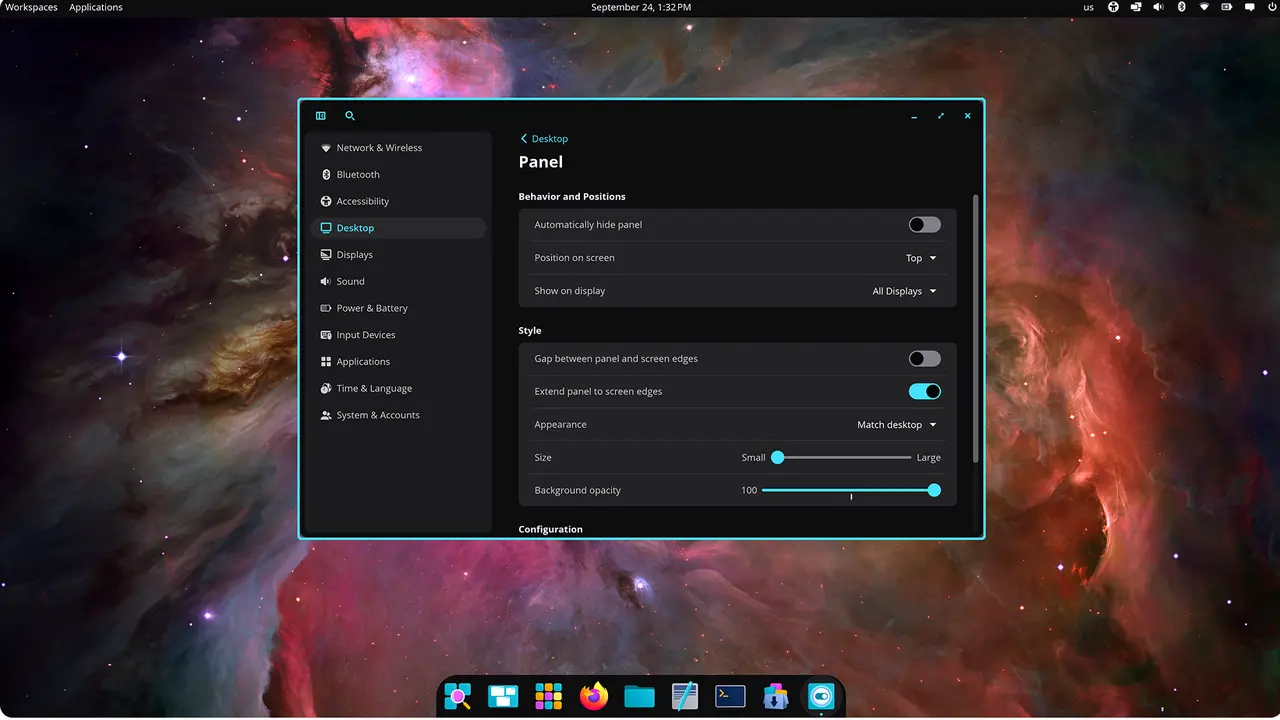
The headline feature lives in COSMIC Settings under Desktop, Appearance. Developers will need to pull updated libcosmic libraries to actually render it properly. It’s not just a visual skin either. The underlying compositor, cosmic-comp, got a serious round of fixes behind the scenes. System76 patched rounding errors in the magnifier, killed texture corruption on multi-GPU setups, and finally got laptops off vendor logos when docking external displays. That’s the kind of compositor-level polish that usually takes years to iterate.
Hardware awareness is getting more serious too. cosmic-monitor now reports total VRAM, GPU power draw, and memory usage across AMD, Intel, and NVIDIA cards. You can actually see what your system is doing without firing up a terminal or installing extra monitoring tools. The panel system learned to preserve its dock style when windows maximize, and the network applet finally migrated to nmrs for better Wayland compliance. Translation updates landed through Weblate, and the project maintains over 6,400 stars on GitHub without feeling bloated.
Pop!_OS 22.04 LTS users should note that full Epoch updates are ending due to dependency shifts. Individual apps like cosmic-files and cosmic-term are still available through Flatpak, but the desktop stack itself is moving on. Keep in mind that the Wayland transition is still rolling out, so expect occasional app compatibility quirks until desktop toolchains catch up.
Head here to the official COSMIC Epoch repository for the full release notes and installation guides. The project is tracking toward a 2.0 milestone, but for now, 1.3.0 feels like the version that finally stops apologizing for its age.


