Bazzite 44.20260820 ships with Linux kernel 7.2, sweeping desktop and driver upgrades
The immutable Fedora Atomic distro positions itself as the definitive Linux gaming OS with a massive kernel jump and updated hardware support.
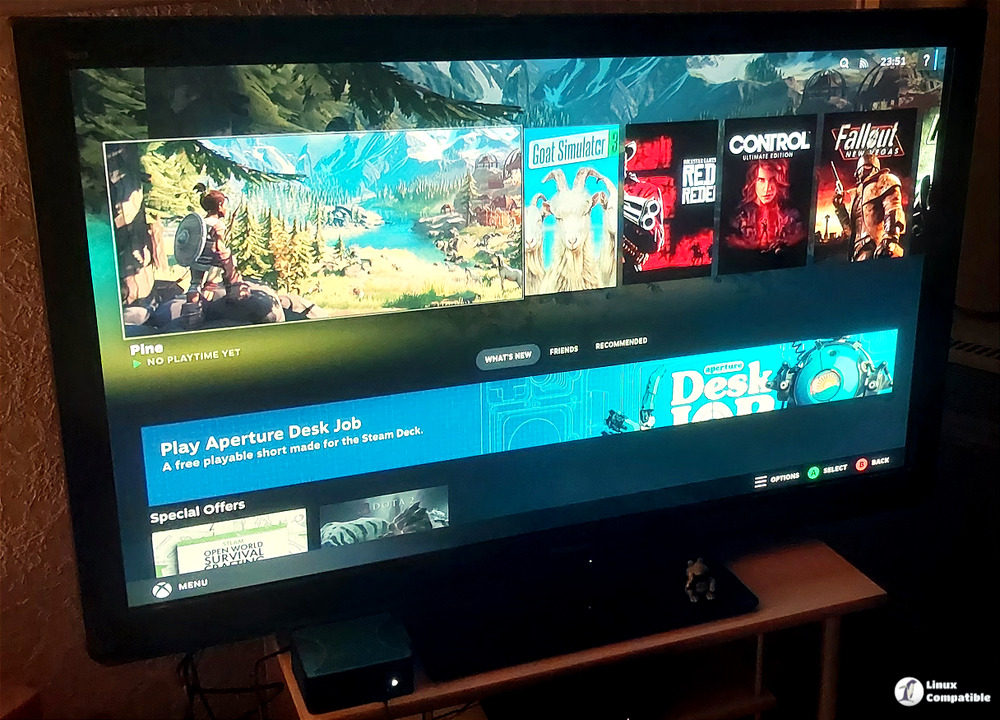
Bazzite has released its latest stable build, 44.20260820, and it's a big one. Built on Fedora 44, the new version jumps the kernel from 6.17 to 7.2, updates the desktop environments to GNOME 50 and KDE 6.7, and brings Mesa drivers to 26.2.1. It's one of the most aggressive upgrades the project has ever pushed to stable.
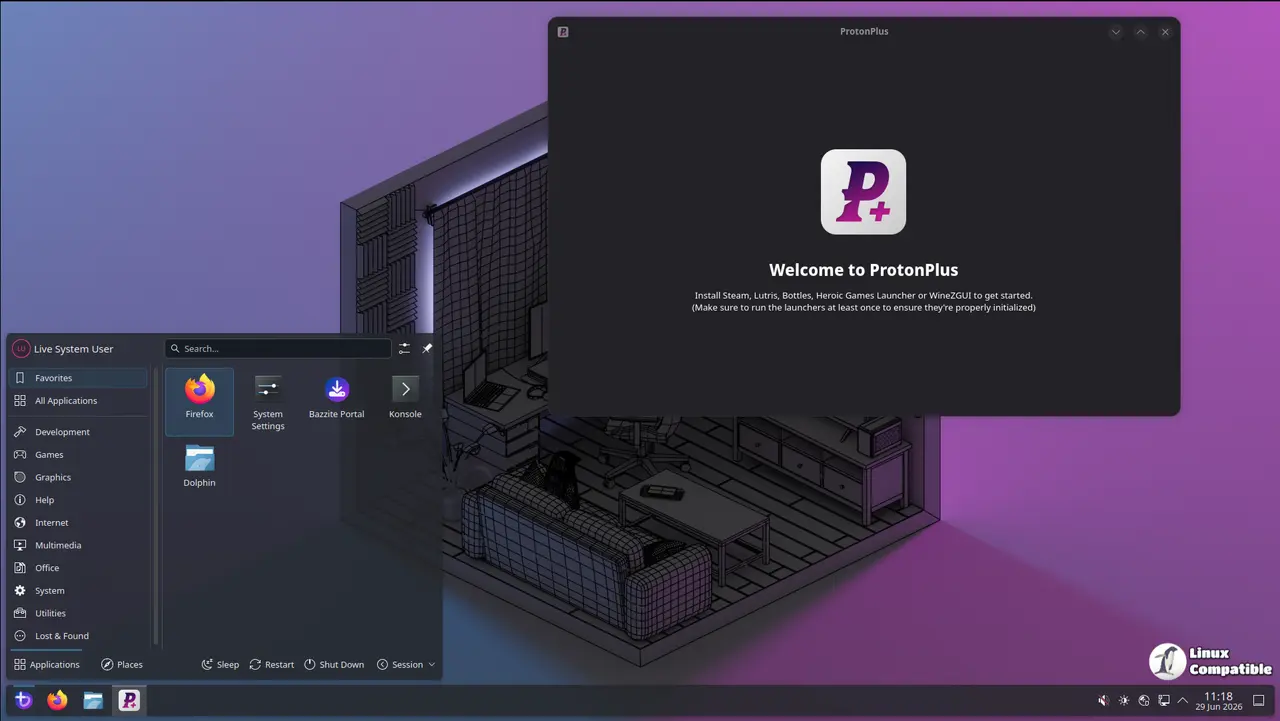
Bazzite is an immutable, image-based distribution built on top of Universal Blue. It was originally designed to work across a wide range of hardware, from desktops to handhelds, with a clear mission: bring the best of Linux gaming to all of your devices. The goal has always been to provide a SteamOS-like experience without the package manager limitations Valve originally shipped. Now, with this update, it's aiming to go further.
The headline changes
The kernel upgrade is the obvious winner here. Linux 7.2 sits several major versions ahead of what shipped in the last Bazzite release. The "ogc" suffix in the final build indicates it includes patches from the Open Gaming Collective, which tune schedulers and GPU performance for gaming workloads.
Valve's own memory and storage crunch forced other hardware makers to revisit shipping timelines earlier this year, but Bazzite clearly had the kernel testing pipeline ready. The build went through several intermediate revisions during the testing phase, moving from 7.2.0-rc7-ogc7 all the way to the final 7.2.0-ogc4. That iterative refinement cycle suggests significant work on driver stability and GPU scheduling before the stable tag was applied.
Desktop environments got massive updates alongside the kernel. GNOME moved from 49.6 to 50.4, bringing the latest design language and Wayland improvements. KDE Plasma went from 6.6.4 to 6.7.4, which matters most for users who want that Steam Deck-style interface on other hardware.
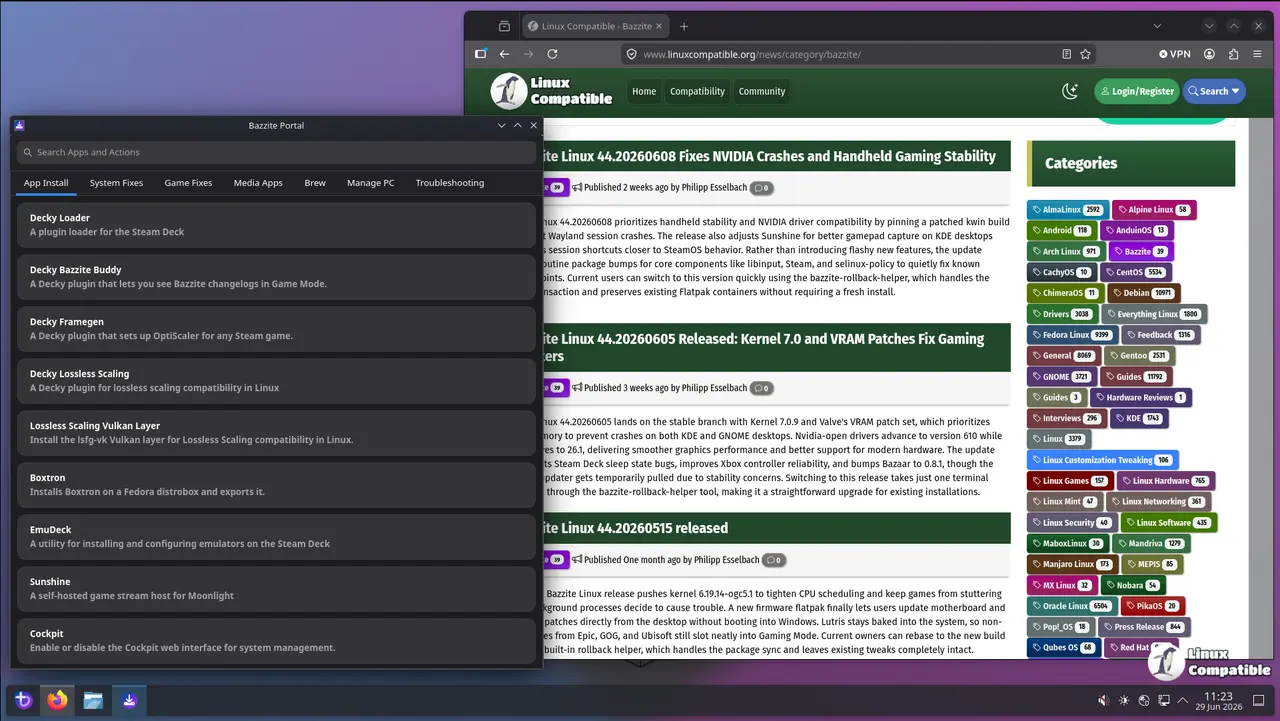
GPU drivers are up to date as well. Mesa is at 26.2.1, which improves Vulkan performance and shader cache management. Nvidia's open driver is now at 610.57.04, and the LTS driver is at 580.173.02. The Bazaar app store jumped to 0.9.3, adding better Flatpak management and system tweaks. New ujust commands now handle AMD VRR setup and HDMI 2.1 toggles.
What hardware runs this?
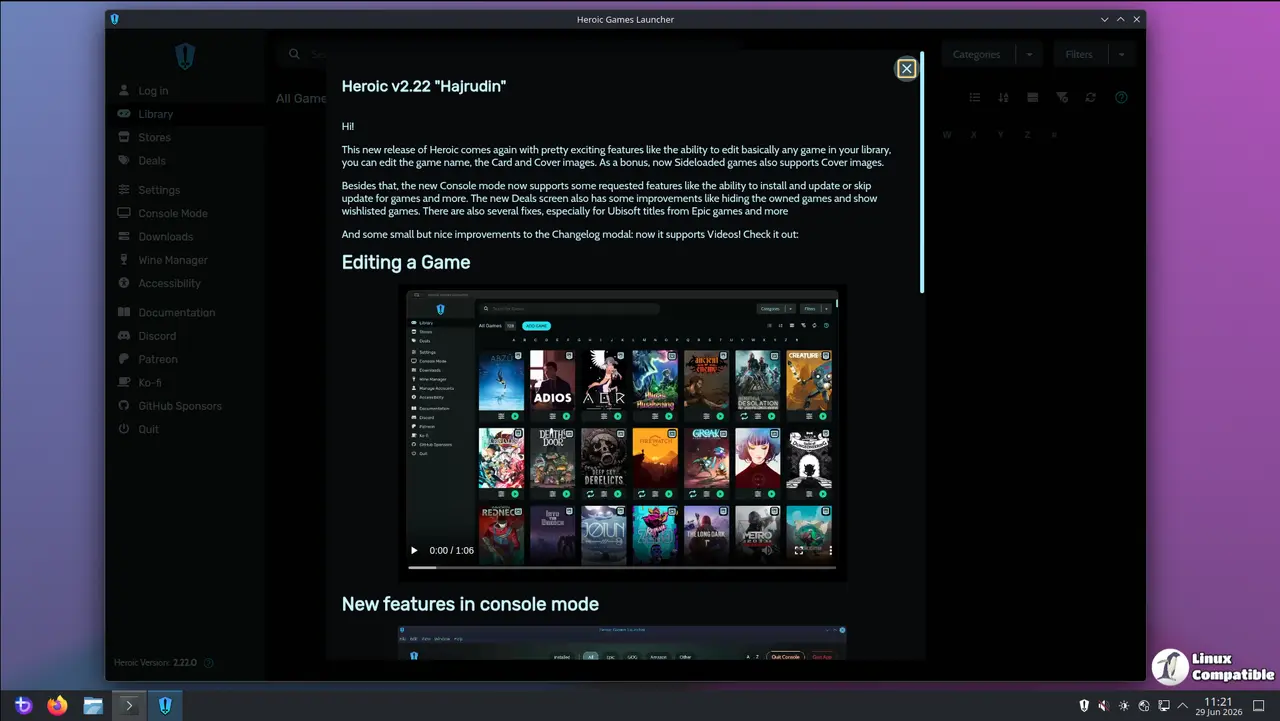
Bazzite continues to support its full lineup of devices without skipping a beat. The Steam Deck (LCD and OLED) boots directly into Game Mode, while the ROG Ally series gets 120Hz VRR and granular TDP controls. The Legion Go lineup handles dual gyro and detachable controllers, and GPD devices keep L4/R4 button support alongside built-in ROCm. OneXPlayer, AOKZOE, and AYN Loki get fan curves and RGB control out of the box. The MSI Claw rounds out the handheld support as beta.
Desktops, laptops, and HTPCs are also supported, with Apple Silicon coming soon. Virtual machines with GPU passthrough are in the mix too.
How to update
Current users can rebaseline with bazzite-rollback-helper rebase stable or pin to the specific version with bazzite-rollback-helper rebase 44.20260820.
bazzite-rollback-helper rebase stable
bazzite-rollback-helper rebase 44.20260820
New users can grab ISOs from bazzite.gg with a hardware-specific download picker. Nvidia users should use the bazzite-nvidia:stable branch instead.
Why this matters
The kernel jump alone makes this release notable. Linux 7.2 brings fundamental changes to scheduling and memory management that were years in development. Combined with the modern desktop environments and drivers, Bazzite is positioning itself as the go-to alternative to SteamOS. The immutable architecture with 90-day rollback means users can stay on cutting-edge software without breaking their system.
It's a rather expensive proposition if you're running a barebones desktop build, but the design and small form factor do help it somewhat. However, at the same time, the lack of upgradability hurts it if you need to swap out specific components later. Bazzite's approach sidesteps that entirely by keeping the system files locked down and letting user packages live in containers.


