Apache NetBeans IDE 30 Released: Faster Git, Better Java Completion, and PHP 8.5 Support
Apache NetBeans IDE 30 drops today with a focus on smoothing out the rough edges that have plagued developers for years. The update brings faster version control operations, sharper code completion for modern Java syntax, and native support for PHP 8.5 pipe operators. If you are tired of watching the editor freeze while scanning repositories or wrestling with outdated build tool defaults, this release actually addresses those daily friction points without adding bloat.
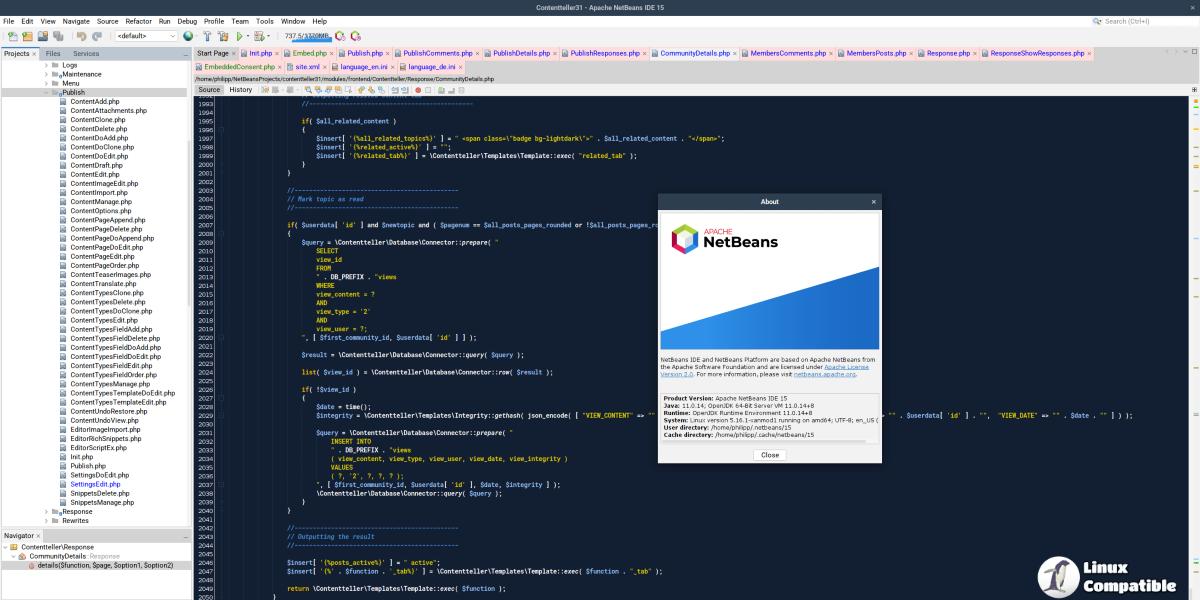
Why Apache NetBeans IDE 30 Matters for Daily Development
The core of this release targets the actual writing and compiling workflow rather than chasing flashy new features. Code completion now handles local classes, record components, and diamond operator expressions without throwing errors or suggesting irrelevant imports. Developers who have watched the editor auto import a simple enum name inside a switch statement will appreciate that those false positives finally get filtered out. The bundled build tools also receive fresh versions across the board. Gradle defaults shift to accommodate JDK 26, Maven climbs to version 3.9.15, and Ant settles at 1.10.17. These updates matter because stale build plugins often cause silent failures during dependency resolution or project synchronization. The IDE now ships with toolchains that match current development standards instead of forcing users to manually override paths in configuration files every time a new project loads.
Version Control Speedups and Editor Tweaks
Git operations used to crawl when working on large codebases, and this release finally addresses the bottleneck behind slow repository scans. The commit dialog now batches file status events and skips redundant checks for unchanged files, which translates to noticeably faster performance when switching branches or staging changes. The editor itself picks up several quality of life improvements that do not make headlines but save hours over a quarter. Markdown previews now render embedded images and run through a plain text spellchecker, which helps documentation teams catch typos without leaving the integrated environment. TOML and YAML templates register automatically on startup, so developers stop fighting with missing syntax highlighting for configuration files. The ZIP export function also appends the correct file extension and opens the parent directory immediately after packaging, removing one less manual step from deployment workflows.
Enterprise Stacks and Language Server Protocol Expansion
Backend teams targeting Java EE or Jakarta EE stacks get explicit support for GlassFish versions 7.1.0 and 8.0.0, along with updated Payara Micro Dev Mode property mappings. CDI injection warnings for predefined bean classes finally clear up, which means fewer false alarms cluttering the editor gutter during heavy refactoring sessions. PHP developers can now use the pipe operator introduced in version 8.5, and the lexer regeneration targets are reenabled to keep syntax parsing accurate across complex codebases. The language server protocol layer expands beyond traditional Java support by integrating rust analyzer directly into the IDE. This integration handles empty replies gracefully, adds proper icons for symbols, and fixes a deadlock that previously locked up the editor during heavy refactoring sessions.
Platform Stability and Under the Hood Adjustments
The underlying platform shifts to FlatLaf version 3.7.1, which aligns component drag indicators with system color schemes and smooths out window resizing quirks on high DPI displays. Startup cache loading gets optimized, and the runtime enables compact object headers through JEP 519 to reduce memory overhead during long coding sessions. Several deprecated API calls get replaced with modern equivalents, and the security manager requirement for unit test bootstrapping finally drops. These changes might sound like backend housekeeping, but they directly impact how smoothly the IDE behaves after a fresh reboot or when switching between multiple open projects. The splash screen also moves to the event dispatch thread and stops blocking user interaction during initialization, so developers can actually start reading documentation while the rest of the environment finishes loading.
Release Apache NetBeans 30 · apache/netbeans
What's Changed Gradle Fixes some "invalid project.xml" warnings by @mbien in #9236 Bump gradle defaults for JDK 26 by @mbien in #9341
Grab the installer if your current setup is showing its age. The update runs clean on existing workspaces, so there is no need to migrate configurations unless you want a fresh start. Keep an eye on the project tracker for plugin compatibility updates, since third party modules sometimes lag behind major platform shifts. Happy coding.


