Amethyst Mod Manager Ships v2.6.2
The Linux-native modding tool gains Hexium support, instance duplication, and a Python 3.15 fix as it pushes further from the Windows apps it was never going to emulate.
For over a decade, modding on Linux meant living under a translation layer. Mod Organizer 2 and Vortex are both Windows apps that merely run under Proton or Wine. That works most of the time. It also tends to break at the worst possible moment, usually when a tool built for the Windows registry meets a Linux filesystem for the very first time. As Linux gaming has matured, pushed along by the Steam Deck, SteamOS, and a growing stack of native titles, the pull for tools built from the ground up has grown right alongside it.
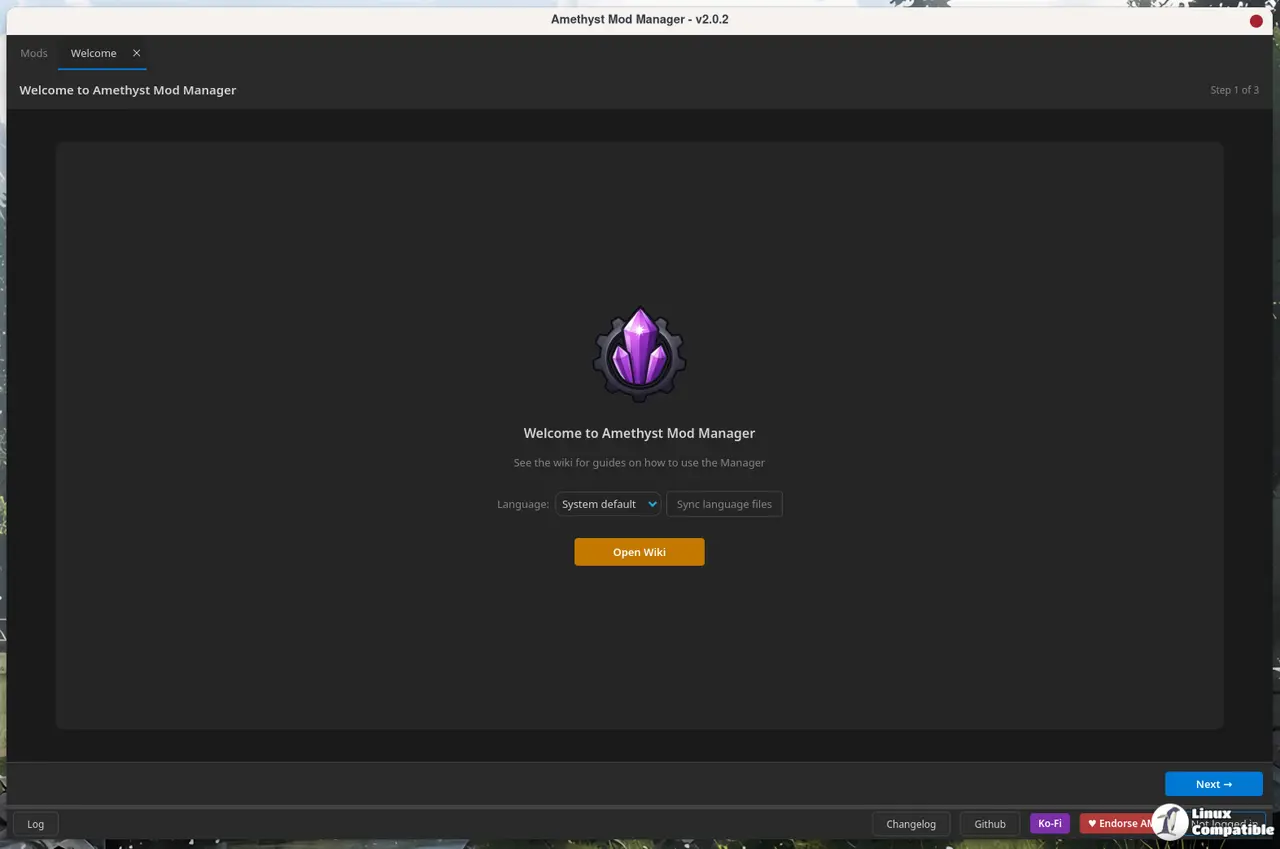
Amethyst Mod Manager answers that pull. It's free and open source, written in Python with a small Rust component called amethyst_filegraph, and it skips the Windows wrapper entirely. Creator ChrisDKN lifted the dual-panel layout beloved of Mod Organizer 2 and the one-click NexusMods hook that Vortex popularized, then bolted on a Linux-native virtual filesystem deploy method meant to dodge much of the symlink pain that tends to choke this space.
As of late 2026 it supports close to 100 games, spanning Bethesda titles, Cyberpunk 2077, Baldur's Gate 3, Stardew Valley, RE Engine games, and a widening spread of Unreal Engine 5 releases. It's quietly become a default for Steam Deck and handheld modders, running under a permissive GPL-3.0 license and held aloft almost entirely by one person, with community support trickling in through Crowdin translations, AUR packaging, and NexusMods endorsements.
What v2.6.2 actually brings
The update landed today. It's mildly telling that the changelog was authored by a bot. ChrisDKN writes the code; the automation does the announcing.
On the game front, Graveyard Keeper 2 gains full support, nudging Amethyst into the farming-and-life-sim genre. New mod sources get the bulk of the attention though. There's now a Hexium browser and mod handler, broadening where you can pull content from beyond Nexus and Thunderstore. Nexus update detection has moved to its newer v3 API so upgrades surface and batch more sensibly.
Workflow touches round out the list. You can duplicate a game instance with a couple of clicks, attach custom links to individual mods, and set your own default mod name on install under Settings > Downloads > Archives. A dedicated installer wizard for Fallout: New California also makes setting up that fan-made Fallout 3 RPG a lot less fiddly.
There are fixes too, and they cover the less glamorous but necessary ground. ReShade wizard output paths are fixed for games with nested executables. Wabbajack installs that used to choke on a "Missing or ambiguous source" error for legacy-encoded BA2 filenames now resolve. A few No Man's Sky mods that once landed in the wrong folder now go where they belong. There's also a fix so Text Files stop showing Steam INIs for GOG installs when both My Games folders are present.
The one to watch, honestly, is the Python 3.15 fix. ReShade and Deploy no longer fail with a lazy_import error on the newest Python release, which matters as more people start adopting it. It's a forward-looking patch, and it matters precisely because of what landed a month earlier.
Built on a landmark release
To see why v2.6.2 matters, it helps to know where it sits. The 2.6.x series opened with v2.6.0 on 29 October 2026, which tech press described as "the most ambitious update in the project's short life." Two features carried that release. First is a genuinely extensible plugin system. Plugins live in ~/.config/AmethystModManager/Plugins and are browsable from a panel in the top-right of the app, pulling additions from the project's resources branch. Two ship in the box: a full Steam Workshop browser and a legacy installer for older C#-scripted .fomod and .omod files.
The second headline is a headless API driven by JSON-RPC 2.0. Amethyst can run without the Qt GUI, letting external scripts drive most of its functions over newline-delimited JSON. It exposes game and profile state, Nexus OAuth, and catalogue discovery. You also get managed downloads, full profile lifecycles, collection install and resume, Wabbajack gallery operations, and managed game launch. Batch operations are capped at 256 items per request, and you can pause or cancel jobs.
Then came v2.6.1 on 2 November 2026, a terse rebuild of v2.6.0 that fixed a Flatpak launch issue. Its changelog reads as one line: "Rebuild of 2.6.0 to fix flatpak launch issue," backed by a diff touching just two files. v2.6.2 is different. It's not an interim bump, and it carries real new functionality on top of the 2.6.0 foundation.
Amethyst as a programmable backend
There's a feature here worth flagging, and one that v2.6.2's Python 3.15 fix directly keeps healthy: headless mode. By turning a desktop app into a programmable backend, Amethyst opens a door that most desktop mod managers have firmly shut against them.
The public boundary is JSON-RPC 2.0 over newline-delimited JSON. A client pipes one JSON object per line into stdin and reads one response per line from stdout, with diagnostics routed to stderr so clients only have to parse stdout. You can launch it a few ways:
# Native / package install
amethyst-mod-manager-cli headless --stdio

# From an AppImage
./AmethystModManager-x86_64.AppImage headless --stdio

# From the Flatpak
flatpak run --command=amethyst-mod-manager-cli \
  io.github.Amethyst.ModManager headless --stdio
A client opens with a system.handshake request declaring its supported protocol version, currently Protocol 1. The handshake advertises a capable feature set, from profile lifecycle and Nexus authentication to Wabbajack installation, LOOT sorting, and managed game launch. There's one detail that matters here: on end-of-input the service waits for all accepted background jobs to finish before exiting, so a dropped connection won't strand a profile half-built. For anyone stringing together custom modding pipelines or launcher integrations, this makes Amethyst a headless-able engine rather than merely a GUI you poke at.
Worth knowing before you install
Amethyst is distributed through the channels Linux gamers actually use, and every channel auto-updates. The Flatpak install runs flatpak install --user https://chrisdkn.github.io/Amethyst-Mod-Manager/amethyst.flatpakref, with updates surfacing both in the manager and in Discover. Two branches exist, stable and beta. The AppImage uses a one-line script via curl and bash, and updates trigger from within the app. Arch users can grab it from the AUR as amethyst-mod-manager.
The Flatpak bundle skips the 32-bit compat extensions that running Windows tools under Proton or Wine requires. The app installs them automatically on first launch, though you can add them yourself if you'd rather keep your hands on the wheel.
Head here to the GitHub release page.


