Trisquel GNU/Linux 12.0 LTS arrives as a Long Term Support release that guarantees security updates until May 2029 while strictly adhering to the free software mandate. The project splits this update into distinct flavors like MATE and KDE for desktops while keeping a barebones LXDE edition alive for those stubborn machines from ten years ago. Users swapping over will find Abrowser 148 and Icedove 140 ship as defaults instead of forcing them to hunt for replacements later on. Kernel choices lean heavily on Linux-libre with version 6.8.x as standard but a Hardware Enablement Stack is available for anyone needing newer driver support.
Trisquel 12.0 LTS release brings five years of free software stability to old and new hardware
The Trisquel team has officially pushed out Trisquel 12.0 LTS to replace legacy systems found in many offices and schools. This update keeps the core promise of zero proprietary drivers while borrowing stability from Ubuntu 24.04 LTS for the next five years. Readers will find a breakdown of the available desktop environments and the specific kernel choices that define this release.
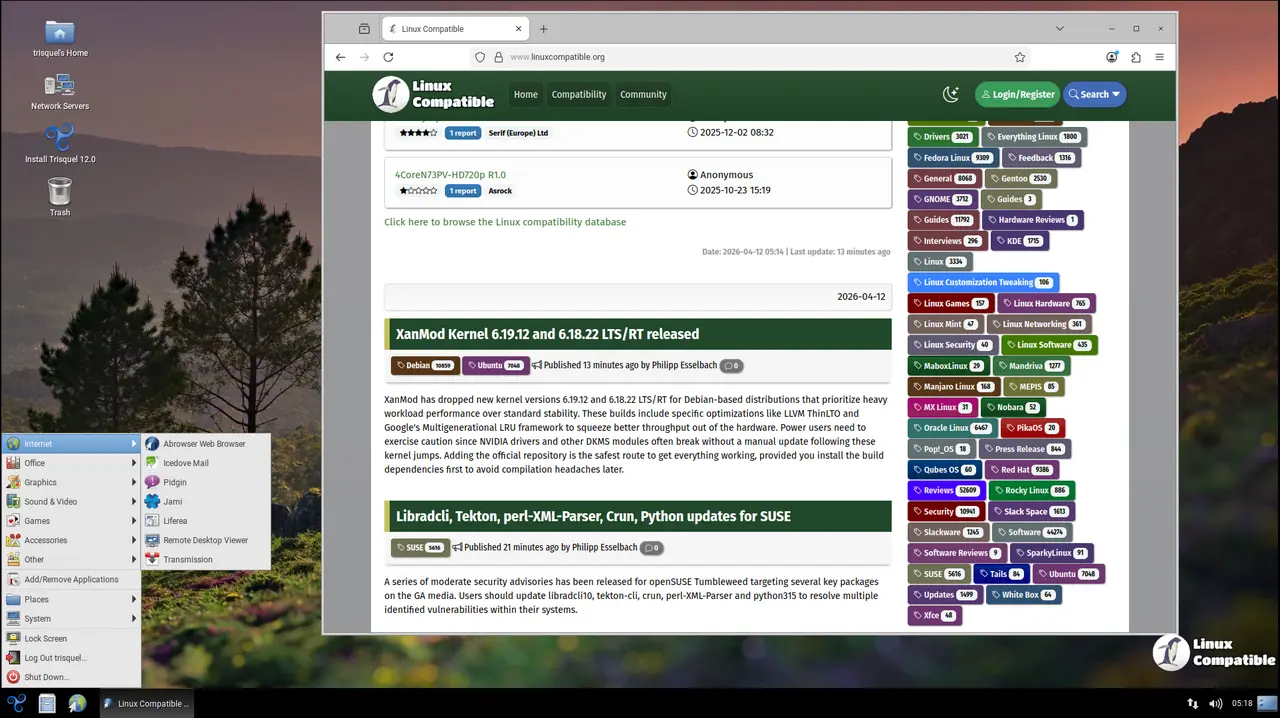
Desktop options cover every hardware tier including legacy machines
The distribution splits into four distinct flavors to handle different user needs without forcing a single interface on everyone. The default Trisquel edition uses MATE 1.26.2 which provides a classic desktop experience matching previous releases for those who dislike modern changes. Power users looking for deep customization can switch to the Triskel version running KDE Plasma 5.27.12 where design tweaks happen in fine detail. Lightweight hardware gets handled by Trisquel Mini with LXDE 0.99.2 which remains perfect for netbooks or computers with a conservative resource usage policy. Educational institutions will find value in the Sugar platform known as TOAST since it comes with dozens of educational activities designed specifically for children. Advanced users deploying servers can utilize the Netinstall image to explore custom environments through a command line interface where GNOME 46 becomes available at the tasksel step. Support extends across multiple architectures including 64-bit Intel or AMD systems alongside Power and Arm variants in both standard and embedded formats.
Software stack prioritizes free tools over proprietary convenience
Abrowser 148 serves as the default web browser for most editions while Icedove 140 handles email duties within the desktop environment. Office work relies on LibreOffice 24 which remains the standard suite across Trisquel and Triskel installations without requiring a subscription fee. The system runs GNU Linux-libre based kernels tracking upstream with version 6.8.x as the default in all editions for better hardware compatibility. A Hardware Enablement Stack pushes kernel 6.17.x to newer machines that require recent driver support beyond the standard release cycle. Backports add several key packages through the repository including latest versions of Inkscape, Tuba, and yt-dlp which users often request for media handling tasks. One common issue arises when users expect standard Ubuntu repositories to work without modification since proprietary firmware often gets filtered out during installation. This means graphics card setup requires extra steps for certain AMD or NVIDIA chips compared to the mainline Linux experience. The decision to maintain a free software guarantee ensures no surprise telemetry or closed source blobs slip into the kernel build process. Over 300+ packages modified by the Trisquel Project just for this release include bug fixes and maintenance patches to ensure stability across the board.
Head over to the download page. Good luck with the install and remember to check your backup routines before upgrading any critical machines.


