QEMU 10.2.0 released
A new version of the open-source machine emulator and virtualizer, QEMU 10.2.0, has been released to the public.
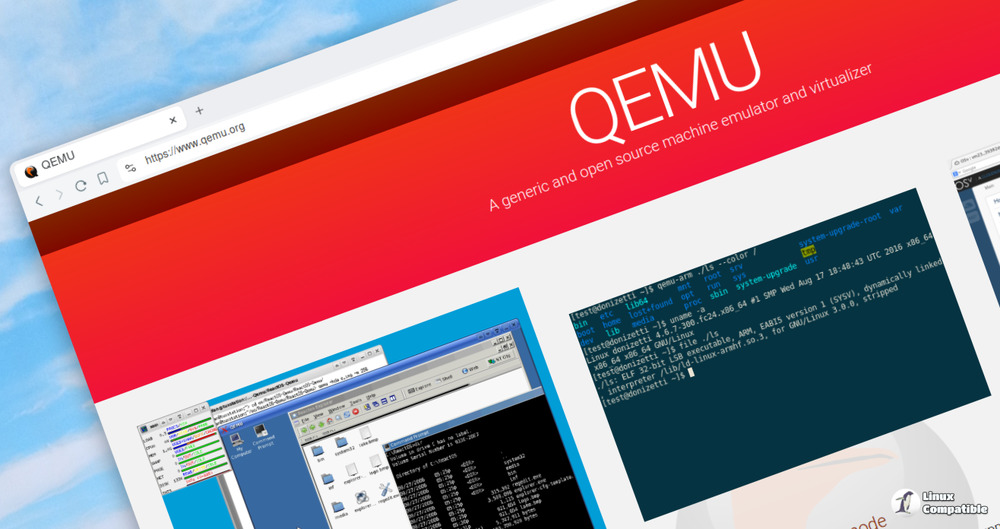
If you're keeping track of virtualization developments, this release marks another significant update packed with changes. Upon closer examination, 188 different authors contributed over 2300 commits, demonstrating a remarkable team effort.
So, where to find this latest code? For the direct download link (the tarball), you'll want to check out QEMU's download page and follow the instructions there. It's usually pretty straightforward.
If you're curious about the significance of all that activity, your best option is to review the changelog. That document lists every single change made in this release cycle; it’s exhaustive!
Some of the headline-grabbing stuff includes better support for FreeBSD hosts now handling 9pfs shared filesystems properly. And QEMU has a new live update capability thanks to the 'cpr-exec' migration mode, which helps keep resource usage down during updates and smartly retains existing states.
Underneath, performance was given a boost by moving towards io_uring for the core virtualization loop; this change should feel noticeable in many use cases.
The user-mode emulation side has received significant attention. Expect smoother operation as it incorporates numerous fixes and upgrades across various functional areas.
On the ARM front, QEMU has beefed up its support for a wide array of CPU features, including FEAT_SCTLR2, FEAT_TCR2, FEAT_CSSC, FEAT_LSE128, FEAT_ATS1A, FEAT_RME_GPC2, and more. There are also new board models available alongside enhancements to existing ones like AST2600, AST2700, AST1030, and xlnx-zynqmp.
Elsewhere, support for the HP 715/64 workstation has been added inside HPPA emulation, plus backing for the NCR 53c710 SCSI controller and HP LASI multi-I/O chip (thanks to community contributions!).
PowerPC users get new CPU/machine combinations with PowerNV11 and PPE42, plus a feature called FADUMP now works on pSeries systems. This should pave the way for more advanced debugging scenarios.
Then there's RISC-V emulation; it received plenty of updates across the board aimed at ironing out persistent problems over time.
Finally, performance enhancements arrived for s390x via an optimized virtio-pci irqfd setup, which could yield tangible speed improvements down there too.


