Proxmox Virtual Environment 9.1 has been released with several key upgrades that aim to provide businesses with more flexibility and control over their infrastructure. The updates touch on container deployment, virtual machine security, and software-defined networking, making it easier for administrators to manage their systems. Notable additions include support for Open Container Initiative (OCI) images, improved virtual machine security through TPM state handling, and enhanced visibility in the Software-Defined Networking layer with clearer monitoring tools.
Proxmox Virtual Environment 9.1 released
Proxmox Virtual Environment 9.1 has been released. This isn't one big change; instead, there have been several important upgrades across the board. Key areas touch on container deployment, virtual machine security, and software-defined networking itself. These improvements aim to give businesses more flexibility, boost performance, and tighten up control over their infrastructure.
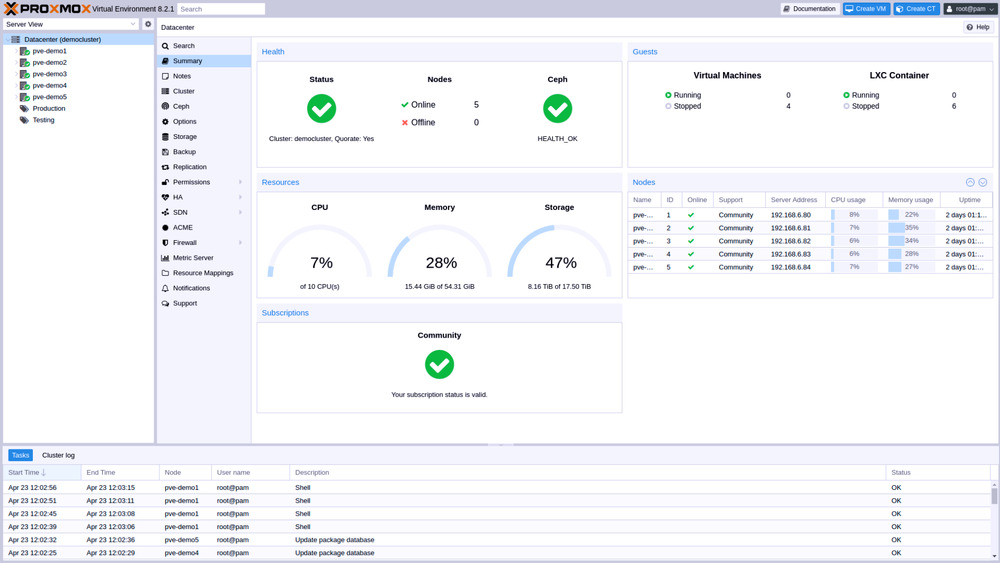
One notable addition is support for Open Container Initiative (OCI) images directly within Proxmox VE 9.1. You can pull these from popular registries or upload them manually as templates. This makes creating standardized containers much easier than before, cutting down the effort needed thanks to a streamlined deployment process that works well through both the graphical user interface and the command line.
Virtual machine security also got a look-in with this release. Specifically, Proxmox VE 9.1 handles TPM state when working with qcow2 virtual machines, which effectively unlocks some new capabilities for VM snapshots. You can now confidently take full VM snapshots even when vTPMs are active, which works across various storage types, including NFS and CIFS shares, plus LVM setups using snapshots as volume chains.
Then there's nested virtualization control. Proxmox VE 9.1 has made it easier for administrators to turn on certain virtualization features by adding a new vCPU flag in the VM settings. This gives far more granular options for managing those specialized guest environments.
Visibility in the Software-Defined Networking (SDN) layer has been improved too. The web interface now provides clearer, more detailed monitoring and reporting tools directly for the SDN infrastructure. That means you can easily track connected guests, look at EVPN zones or fabrics, and monitor IP-VRFs and MAC-VRFs all through one place. This enhanced observability makes cluster-wide network troubleshooting and just keeping an eye on things considerably simpler.
Getting started with Proxmox VE 9.1 is straightforward. The solution is available now for immediate download as an ISO file if you're looking to install it fresh or migrate from another system entirely. Bare-metal installations are quick thanks to the user-friendly setup wizard. Existing users of previous versions can upgrade smoothly too; just use the APT package manager like they normally would.
And remember, Proxmox VE follows its usual open approach: the complete codebase is released under the GNU AGPLv3 license, meaning it's Free/Libre and Open Source Software (FLOSS). For enterprise needs, though, professional subscription support plans are available. These aren't mandatory for just anyone; they're optional options providing certified updates delivered through the web interface plus technical assistance, often recommended for those running in production environments.
For more information, visit the official announcement.


