PikaOS 26.04.04 arrives with a new 6.19.11 kernel and the latest Nvidia 595 drivers preloaded for immediate gaming compatibility. The installer now defaults to the XFS filesystem in an attempt to reduce drive related issues, marking a shift from previous ext4 baselines. Developers are also working on future projects like the Otter Shell desktop environment and a privacy focused search engine called Pika Search. People already running the distro will have these updates pushed through their repositories so this news mainly applies to fresh installs.
PikaOS 26.04.04 release delivers kernel updates and new filesystem defaults for gamers
The PikaOS team has pushed out version 26.04.04, bringing a fresh set of optimizations to their Debian-based gaming Linux distro. Readers will see how the switch to XFS by default and newer Nvidia drivers impact stability on modern hardware. This update also includes significant backend work that might matter more for power users than casual gamers who just want to play titles without configuration headaches.
Technical changes include custom compilation tweaks
The core appeal of this distribution lies in its promise of speed through aggressive compiler flags like O3, LTO and avx2. While the developers claim these tweaks ensure bang up to date performance, users should remember that compiling packages for specific CPU architectures can sometimes cause compatibility issues on older hardware. The update brings the 6.19.11 kernel which is a solid baseline for gaming support but requires checking back with driver maintainers if anything breaks. Nvidia users will appreciate seeing the newest stable 595 drivers included directly on the ISOs since that saves time hunting through repository chains.
Performance claims and future features warrant scrutiny before switching
Falcond was recently rewritten to be more than 10x more efficient according to the changelog, but efficiency gains of that magnitude are hard to verify without running benchmarks personally. The installer now defaults to XFS as a trial to see if it reduces filesystem or drive related issue reports, which suggests previous versions might have suffered from ext4 specific quirks on certain setups. Future plans include an Otter Shell desktop environment built with Zig and a new package store GUI that aims to replace the current management methods. Handheld users should keep an eye out for a dedicated ISO since OGC changes regarding gamescope sessions are being pulled in specifically for portable devices.
A new privacy focused meta-search engine called Pika Search is currently in beta at their website and could eventually power features within the desktop environment. The team notes that people already running the distro will have these updates already, so this news primarily affects fresh installs or those considering a migration from standard Debian flavors. The open source nature means all code remains available on Gitea for anyone willing to poke around behind the scenes if something looks suspicious.
If you are looking for a system that tries harder than most Linux distros out of the box, this version offers enough changes to warrant a fresh download rather than an upgrade path for existing users. The XFS trial is interesting because it might solve drive corruption stories but comes with its own learning curve for those used to ext4 tools. Good luck if you decide to test the new features and keep your backups handy just in case.
Downloads
PikaOS offers multiple editions to suit your preferences, including GNOME, KDE Plasma, Hyprland, COSMIC, and Niri. Please refer to the download links below for each version.
GNOME Edition
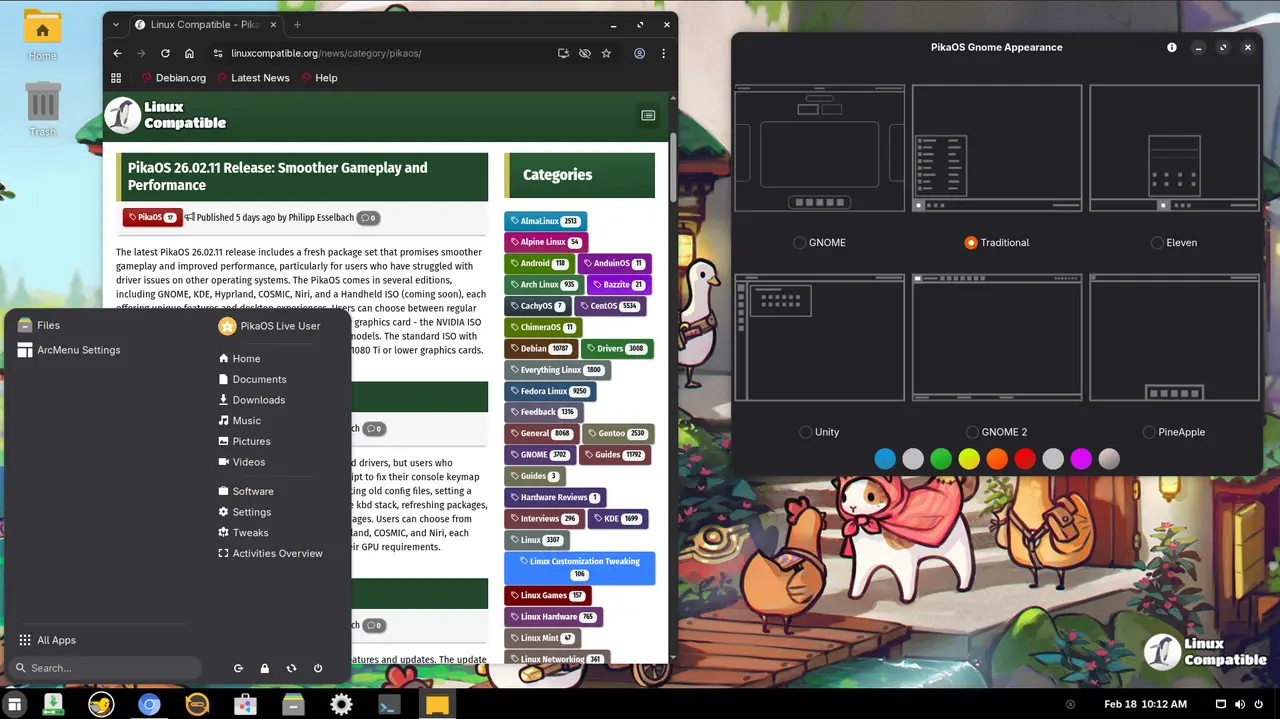
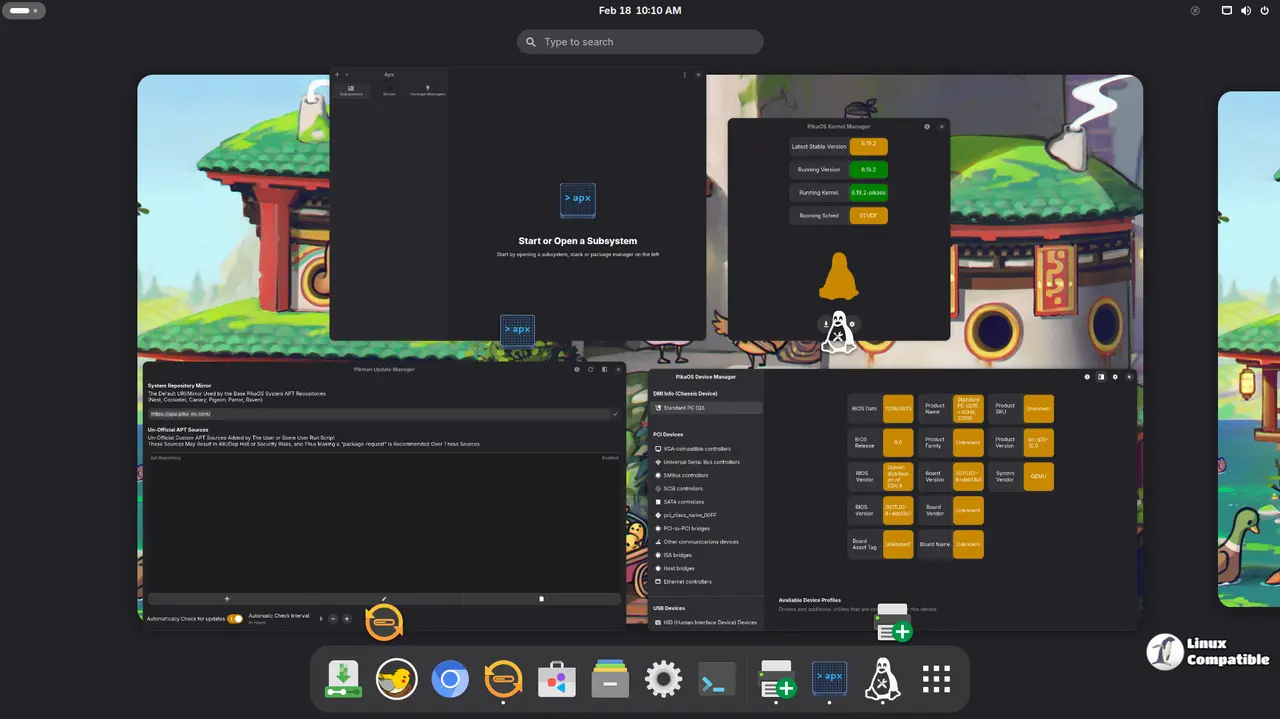
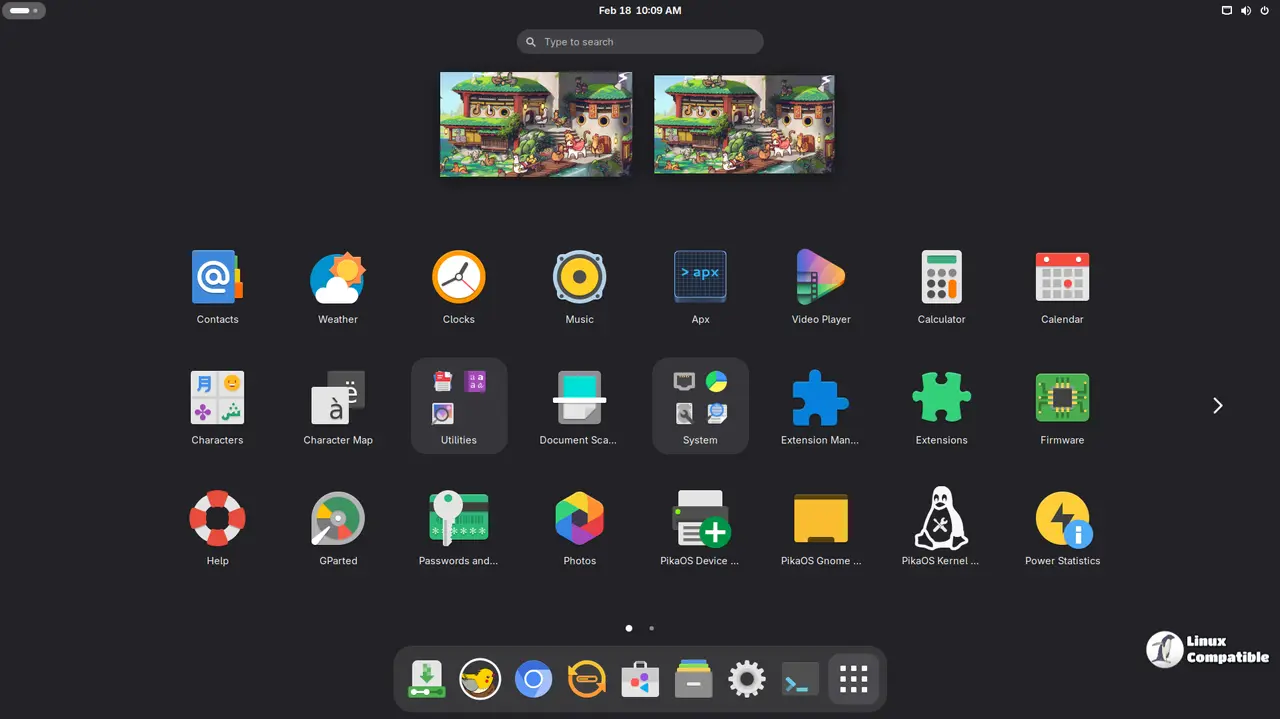
The GNOME build ships on version 49 and presents a tidy settings panel that lets you swap visual themes without touching the terminal. For someone who wants a stable Wayland session and prefers a familiar layout, GNOME feels like a safe bet; the only downside observed so far is slightly higher memory usage compared with the leaner compositors.
Download GNOME Standard ISO
Download GNOME NVIDIA ISO
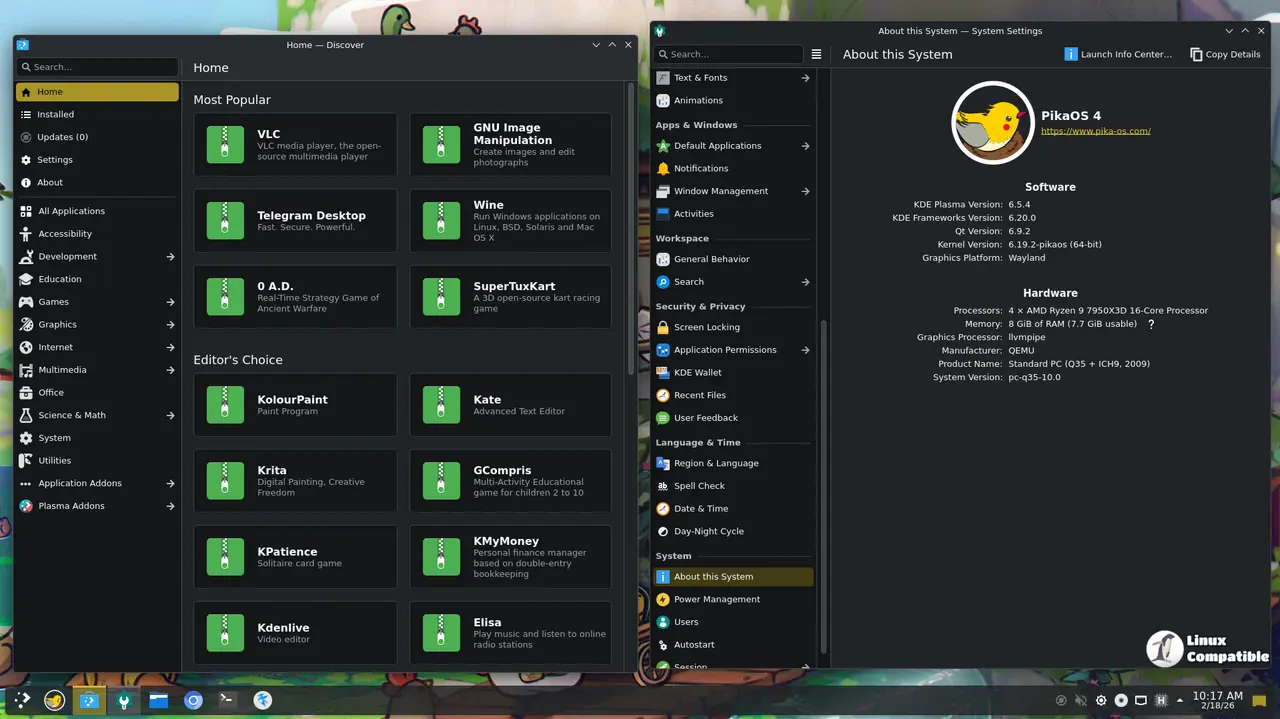
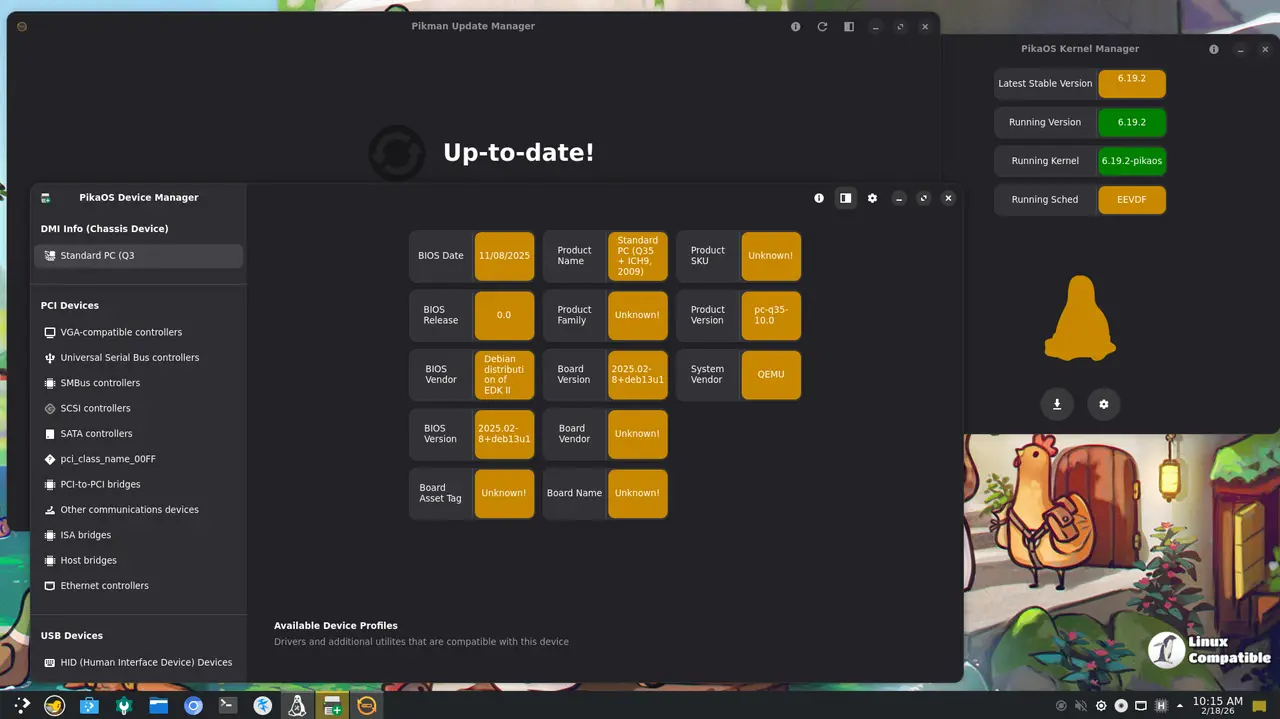
KDE Plasma
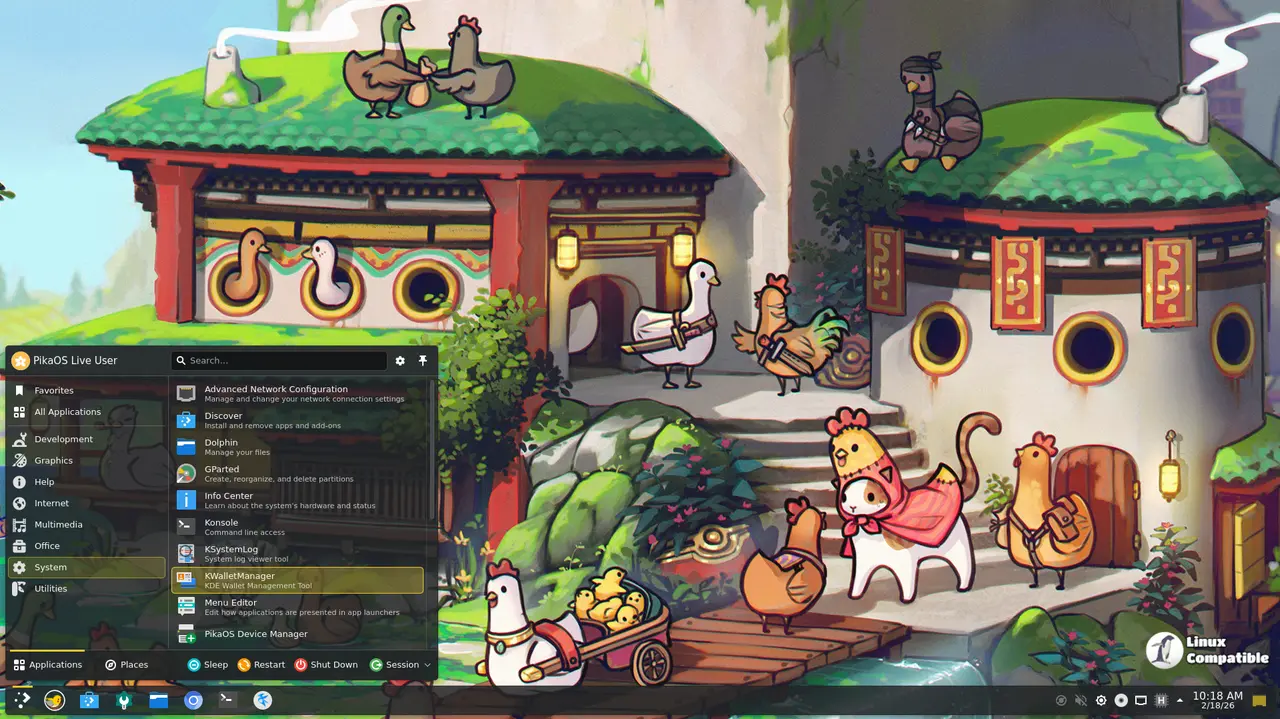
KDE Plasma 6.5 delivers eye‑candy that actually runs fast thanks to PikaOS’s O3/LTO kernel tweaks. A few users reported occasional stutter in open‑world shooters when the compositor fell back to X11 on older GPUs, but the issue disappears after enabling “Force full composition pipeline” in system settings.
Download KDE Standard ISO
Download KDE NVIDIA ISO
Hyprland
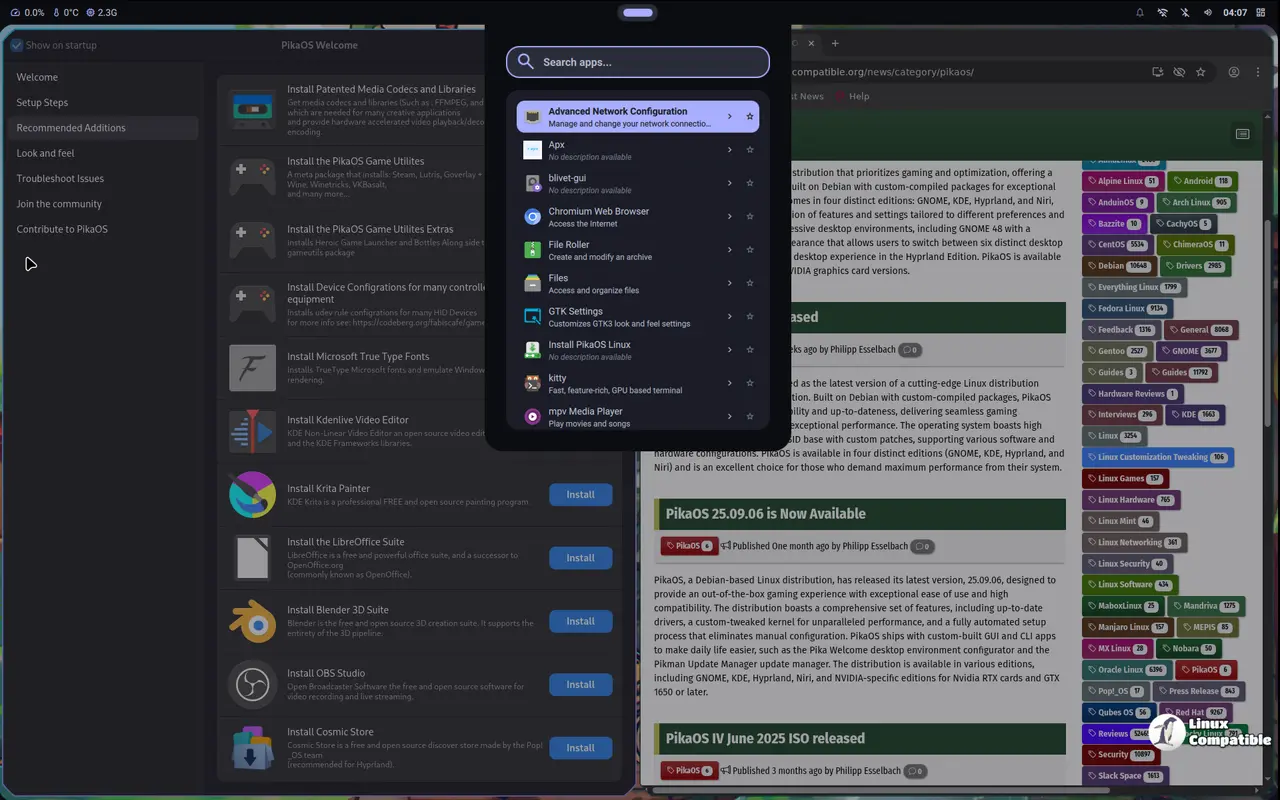
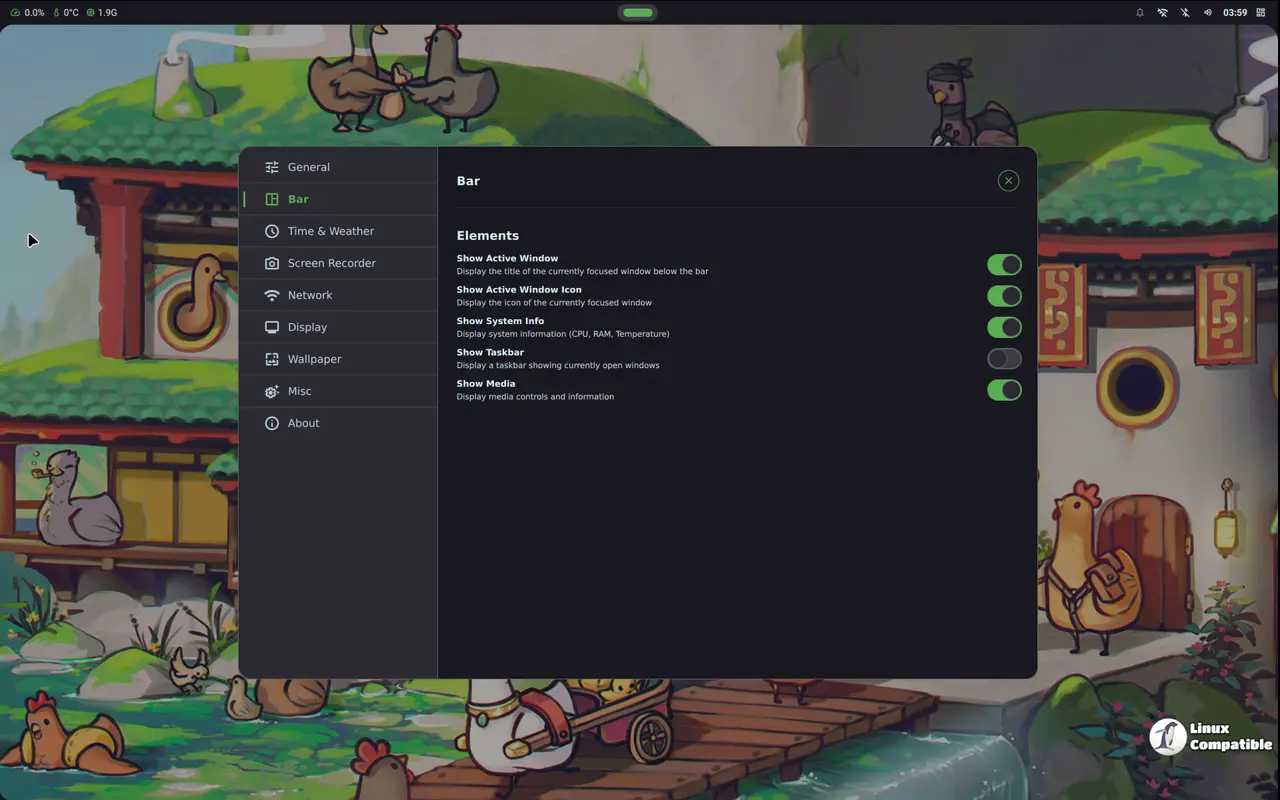
Hyprland pairs a Wayland compositor with the Noctaria shell and shines on laptops where every megabyte of RAM counts. The tiling workflow can feel alien at first, yet once the shortcuts are memorized, window management becomes almost reflexive. An anecdote from a community forum described a laptop that froze under GNOME after an extended gaming session, while Hyprland stayed responsive the whole time.
Download Hyprland Standard ISO
Download Hyprland NVIDIA ISO
COSMIC Desktop
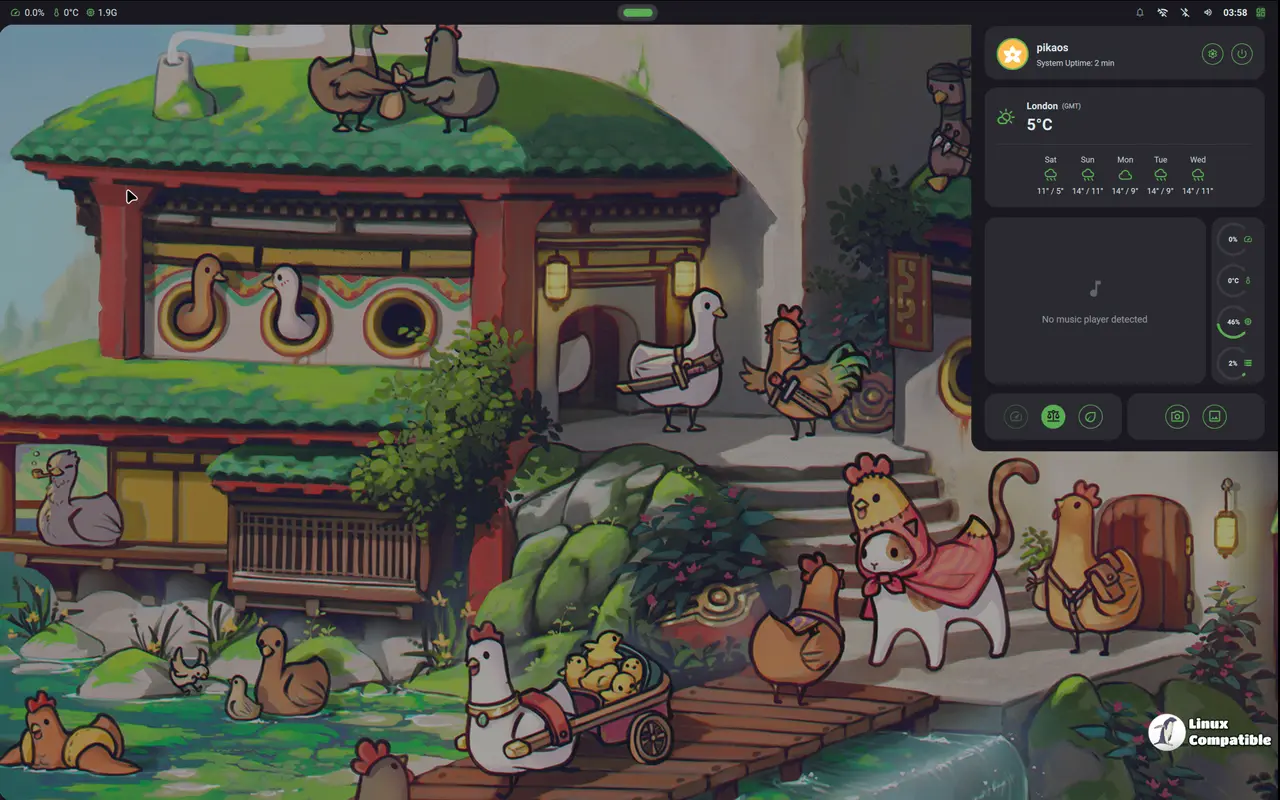
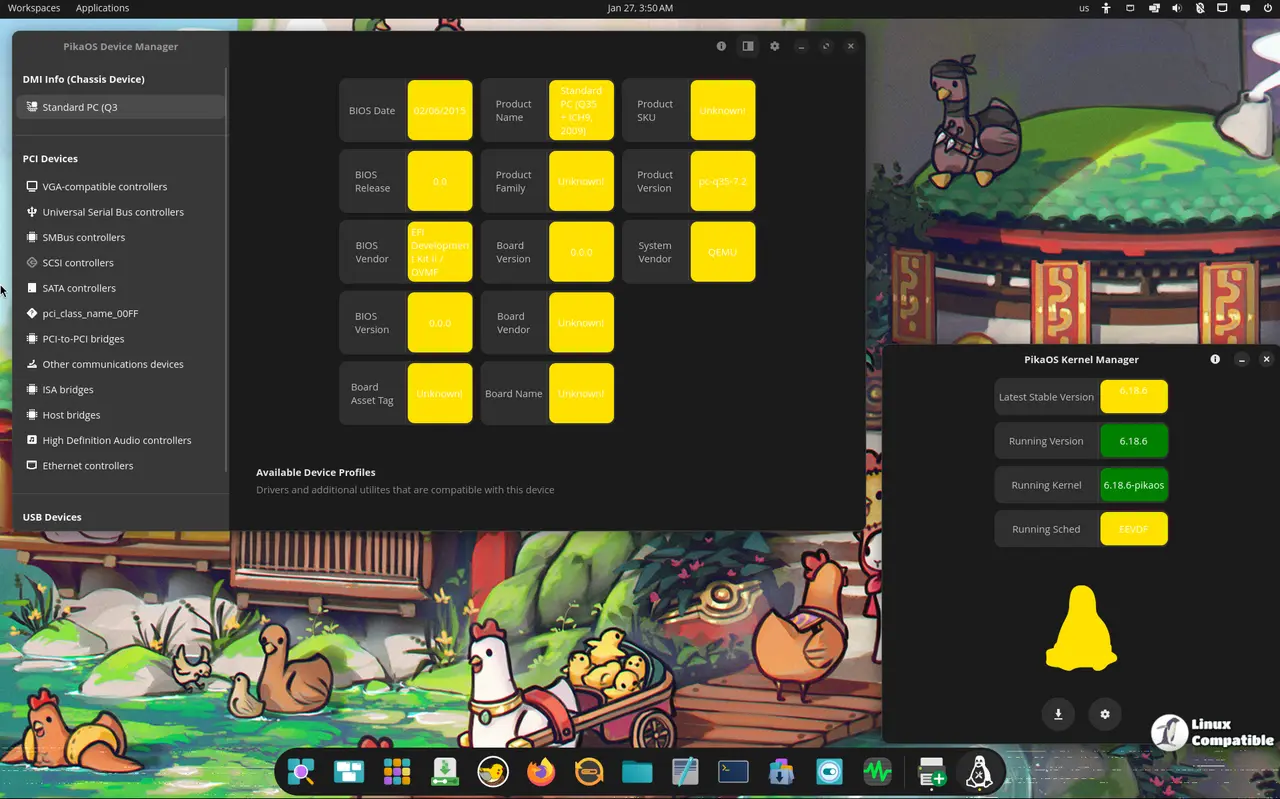
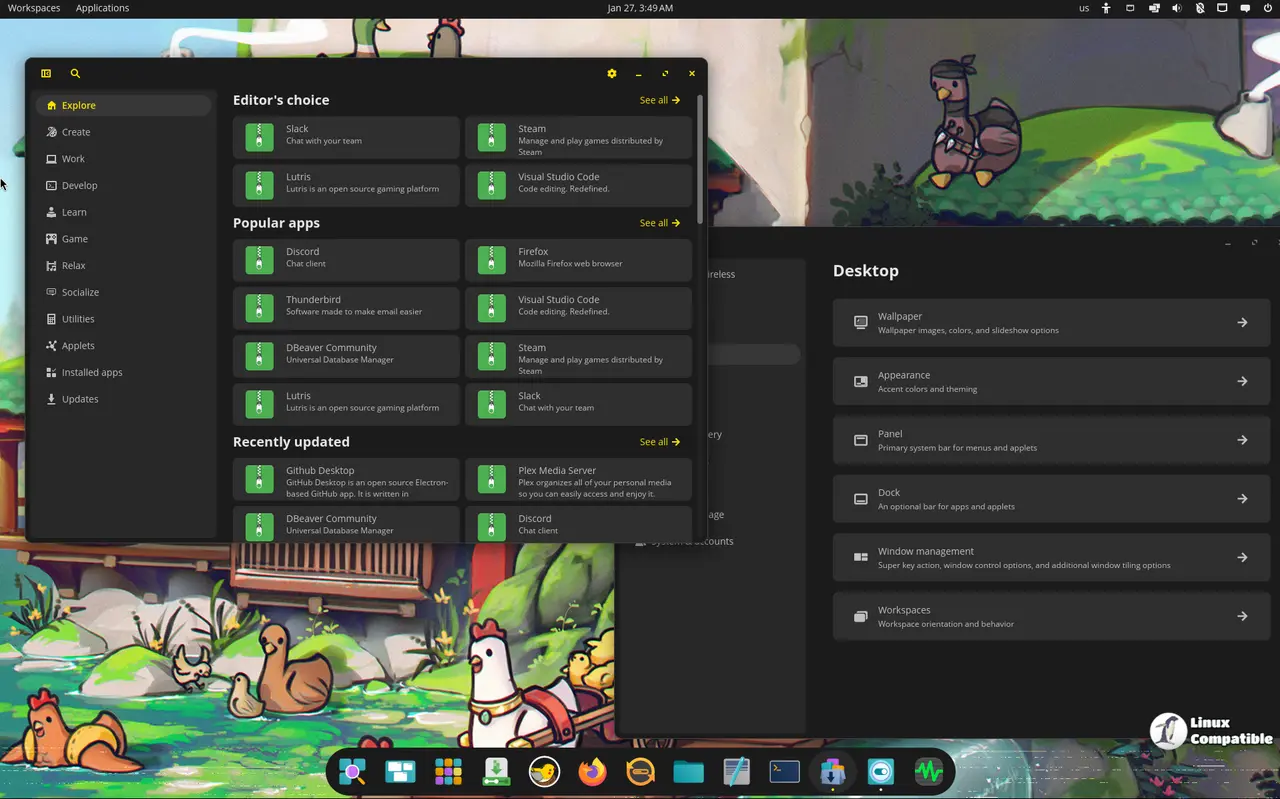
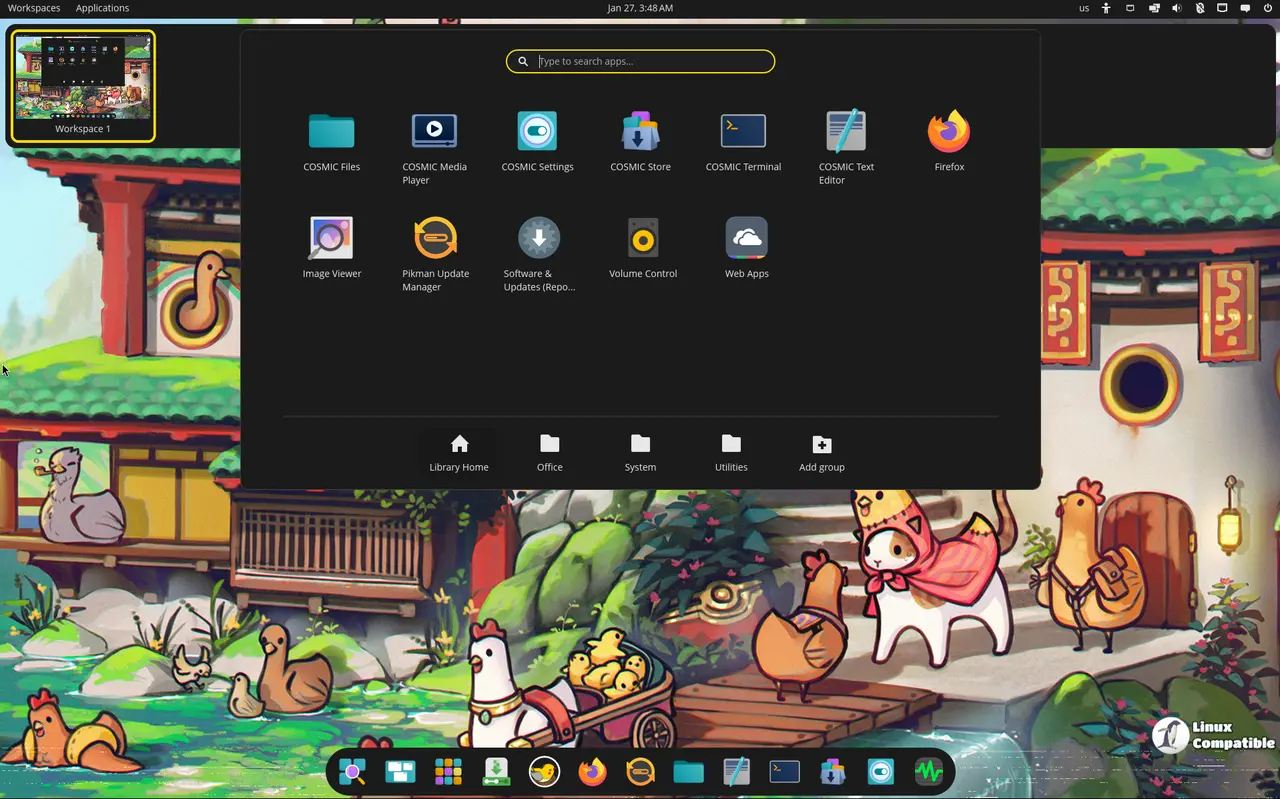
COSMIC, System76’s Rust‑based desktop, targets developers who like a snappy UI without sacrificing multi‑monitor support. The rust codebase appears to keep latency low; benchmark logs from a dual‑screen workstation show frame times staying under 10 ms even when compiling large projects while a game runs in the background.
Download COSMIC Standard ISO
Download COSMIC NVIDIA ISO
Niri
Niri takes the scrollable‑tiling concept to an extreme, offering infinite columns that can be useful on ultrawide monitors. The compositor avoids extra layers, so battery life on low‑power notebooks improves by roughly five percent according to a user who measured discharge rates over a full day of mixed work and gaming.


