PikaOS 25.12.16 has been released with Linux Kernel 6.18 and boasts genuinely smooth performance for gaming and everyday use. Based on Debian GNU/Linux, it utilizes custom-compiled packages optimized for efficiency and speed. The distro's open-source nature encourages community participation, ensuring a collaborative effort to keep things fresh and moving forward. PikaOS offers four distinct flavors: GNOME, KDE, Hyprland, and Niri, each catering to different needs or aesthetics, from traditional desktops to innovative tiling environments.
PikaOS 25.12.16 released
PikaOS 25.12.16 has landed with Linux Kernel 6.18, Mesa 25.3, and Nvidia 580 driver. This Linux distro offers genuinely smooth performance for gaming and everyday use. Built on Debian GNU/Linux, it leverages custom-compiled packages known for their efficiency and speed gains. Modern techniques, such as O3, LTO, and AVX2 support, have fine-tuned key components like the kernel to extract maximum performance from every application.
Open-source is at PikaOS's heart. Developers can find the code on Gitea, contributing or tinkering as they wish. This community focus helps keep things fresh, and a dedicated user base keeps it moving forward through collaboration.
Looking beyond the core tech, PikaOS brings several features to the table. Comprehensive driver support helps hardware perform well; there are also tools for tweaking performance itself. And let's not forget its bird mascot; it seems to resonate with users. The distro focuses on making Linux gaming accessible without sacrificing flexibility or power.
For those navigating installation options, PikaOS presents four distinct flavors: GNOME, KDE, Hyprland, and Niri. Each targets slightly different needs or aesthetics, from the classic feel of traditional desktops to the innovative tiling environments offered by Hyprland and Niri.
Let's break down these editions more clearly. The GNOME version uses 48 as its base and includes powerful tools like the GNOME Appearance settings; this lets users swap between six different visual themes easily, think Windows-like, (Pine)Apple-inspired, or even a classic Unity feel alongside standard GNOME options. It aims to deliver a familiar yet flexible Wayland experience.
Download GNOME Standard ISO
Download GNOME NVIDIA ISO
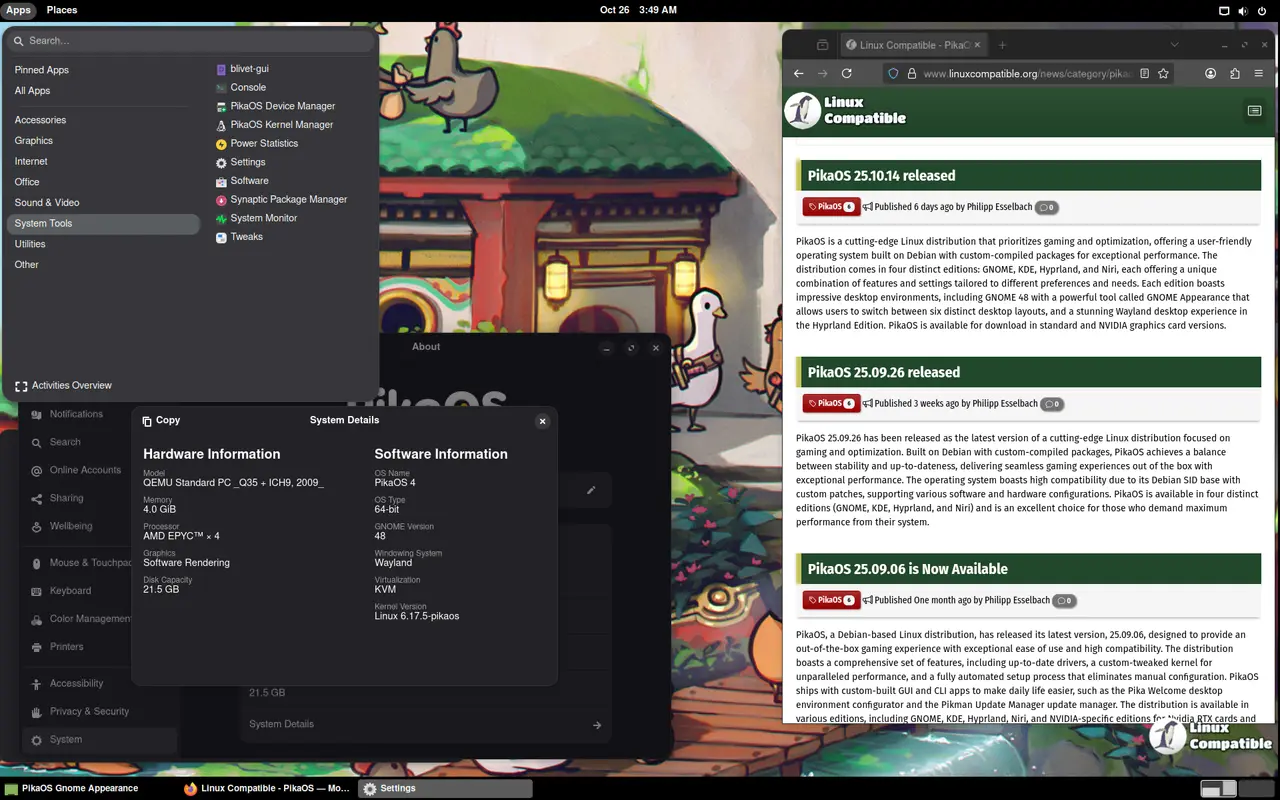
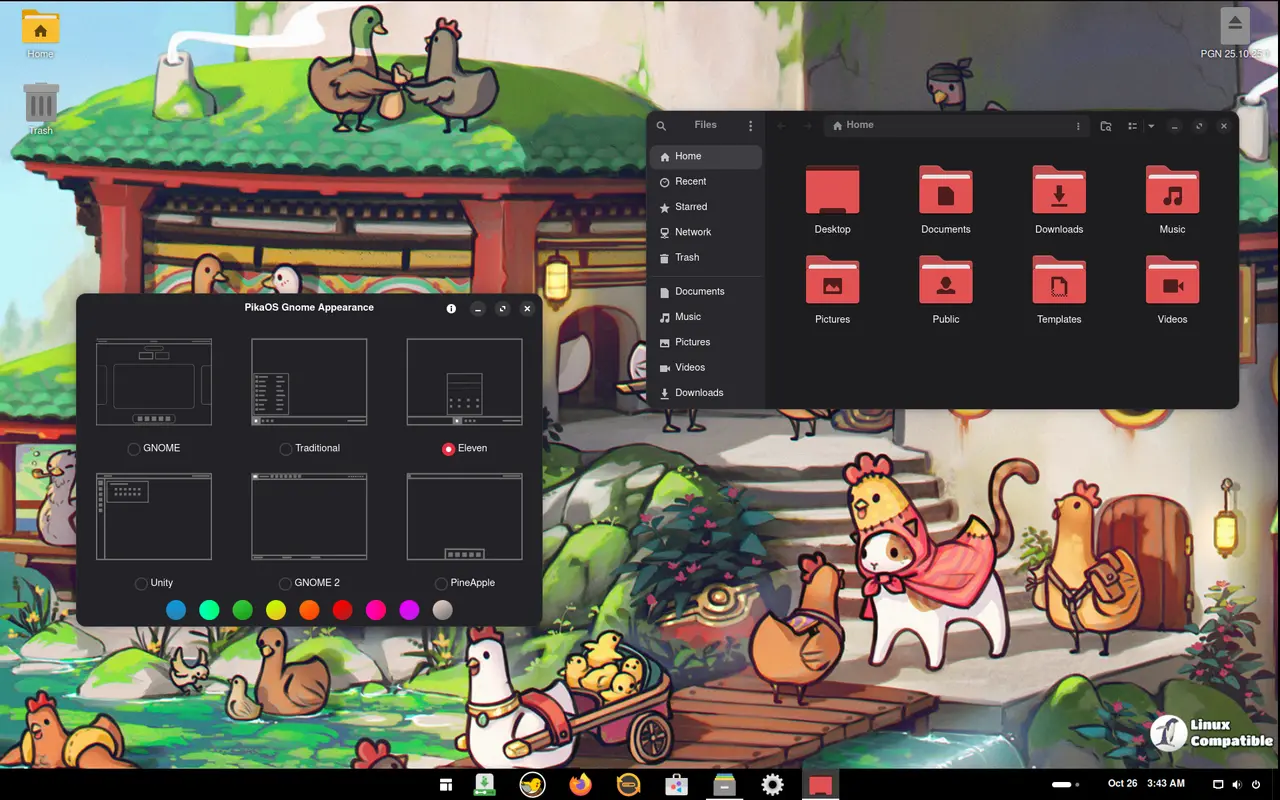
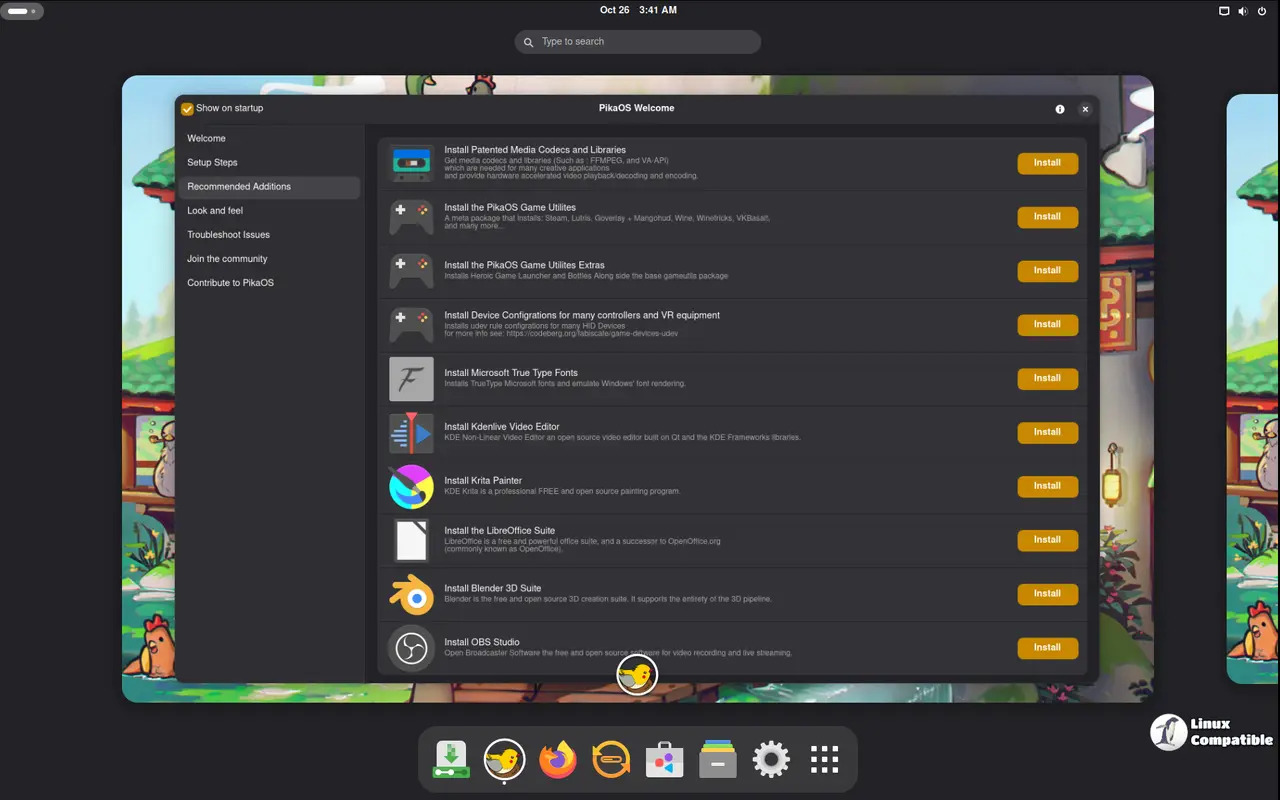
The KDE edition currently runs Plasma version 4.3.6. While it's an older release compared to the newer editions, Plasma remains capable and functional for users who prefer its extensive customization possibilities over tiling environments or other desktops.
Download KDE Standard ISO
Download KDE NVIDIA ISO
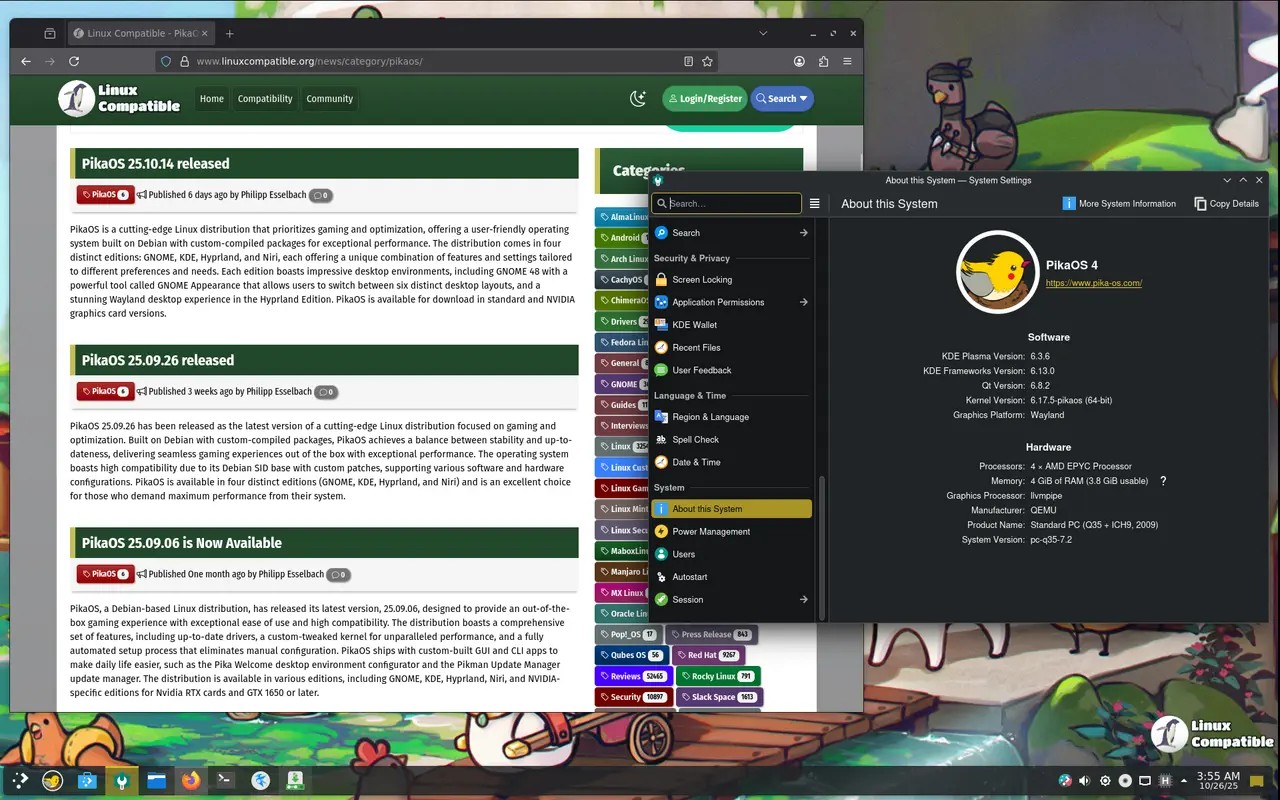
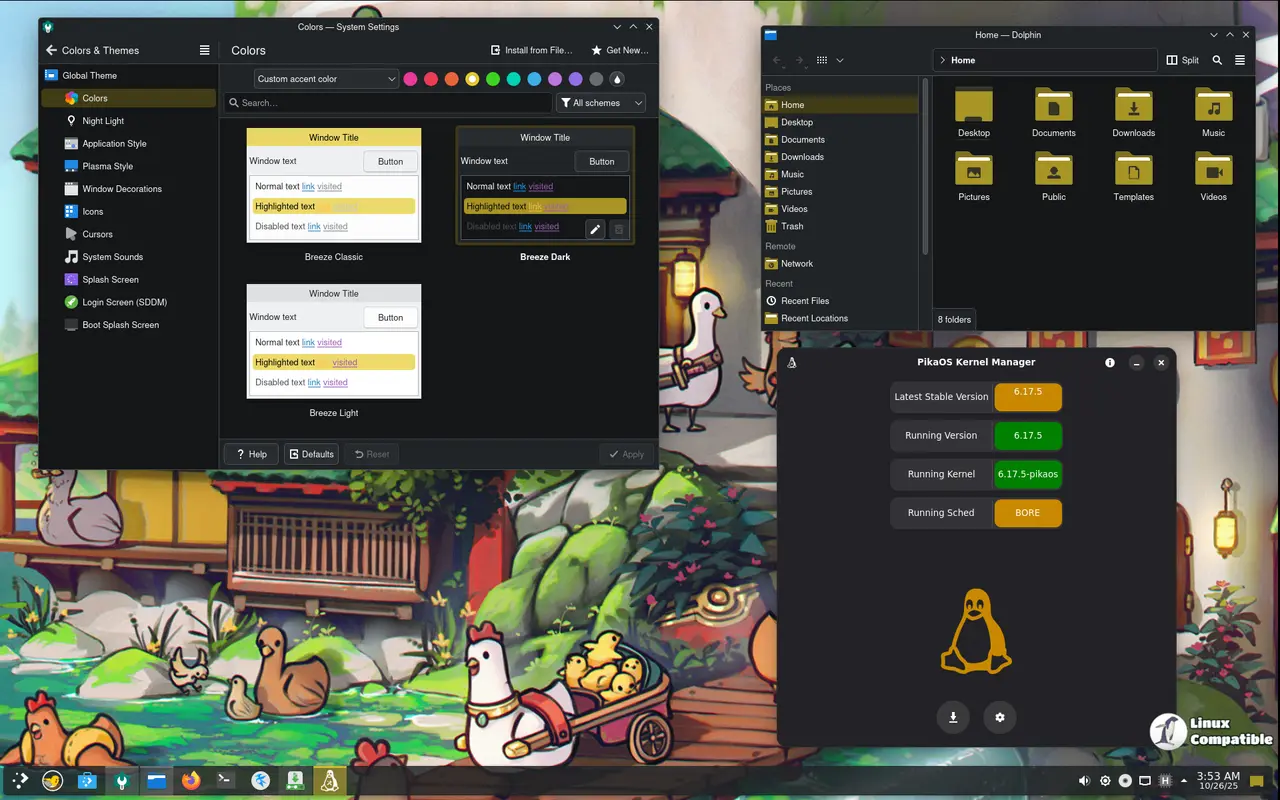
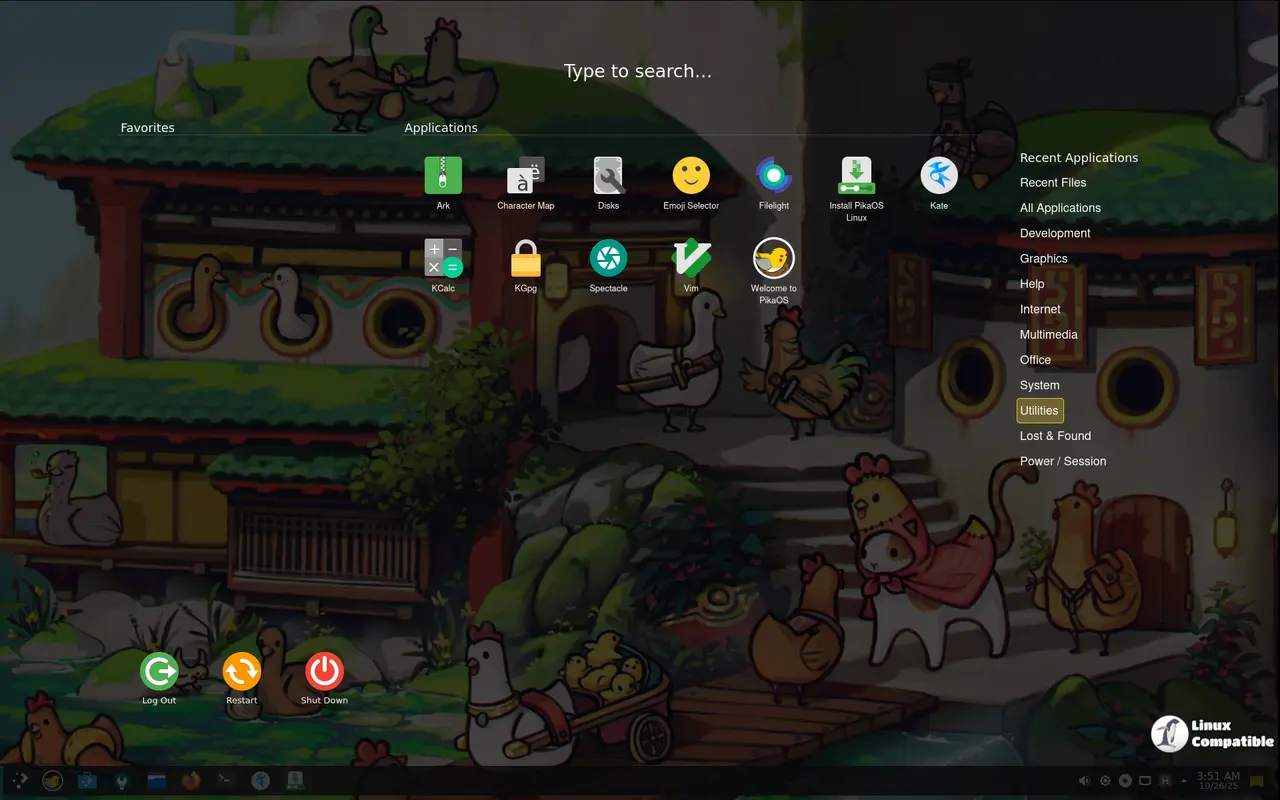
Then there's Hyprland, based on that innovative compositor paired with the Noctaria shell, which provides a powerful Wayland experience focused heavily on dynamic window management. It offers an excellent blend of speed and visual polish thanks to the underlying tech, combining practicality with elegance for users who appreciate both simplicity and customization.
Download Hyprland Standard ISO
Download Hyprland NVIDIA ISO
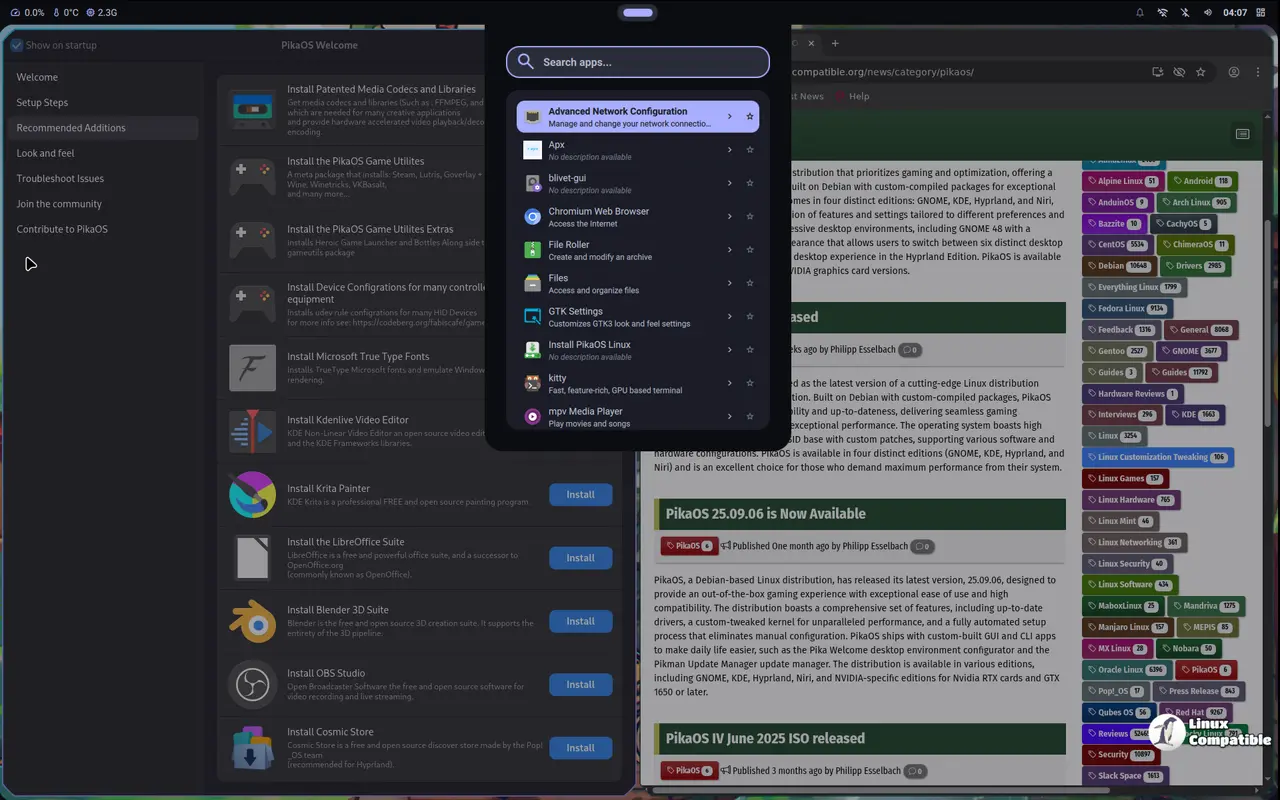
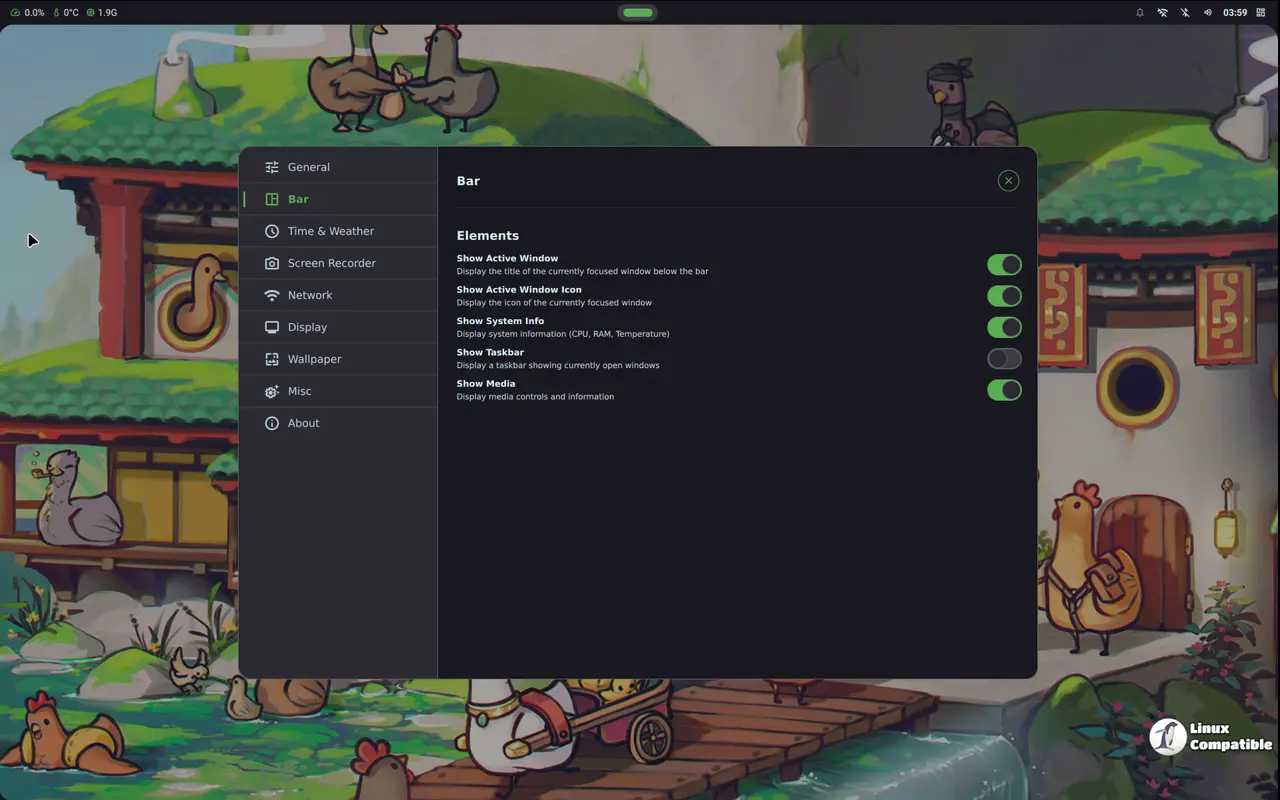
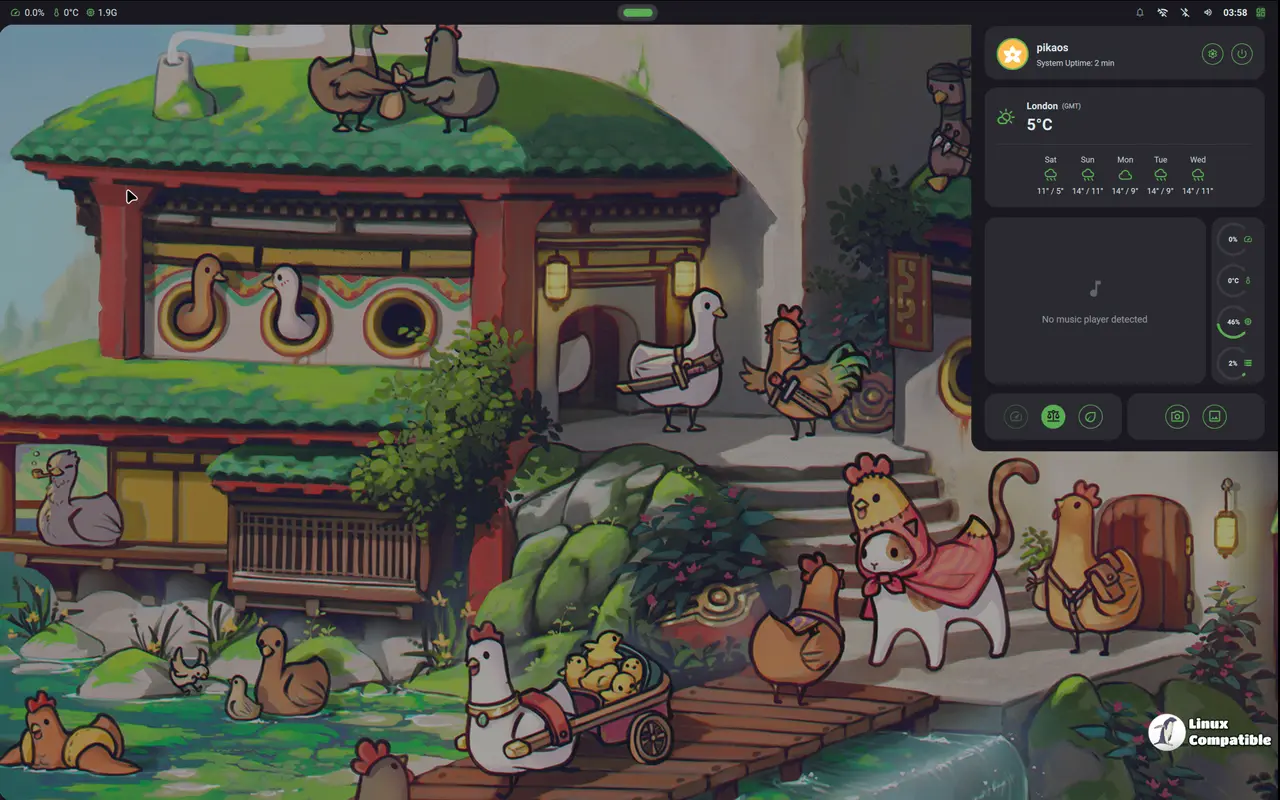
Finally, Niri brings its own take on the Wayland compositor. It's designed for efficiency and getting things done flexibly, featuring a scrollable tiling approach that allows arranging windows in columns extending infinitely across your screen, providing unique workspace management potential compared to other options like Hyprland or KDE Plasma.
Download Niri Standard ISO
Download Niri NVIDIA ISO
Essentially, PikaOS covers different bases with its four editions, offering everything from the robustness of GNOME 48 and the flexibility of Plasma (even if a bit dated) right through to two powerful, modern tiling environments, Hyprland and Niri. You can explore these options further via the PikaOS Wiki or look at the changelog details for what's new in this release.
Installation-wise, users have choices: standard ISOs are available alongside specialized ones like an NVIDIA version tailored for each flavor. These images are downloaded directly from the official website, offering a straightforward way to dive into the latest release without needing a complex manual setup first.


