OpenSSH 10.3 Released With Critical Security Fixes For SSH Users
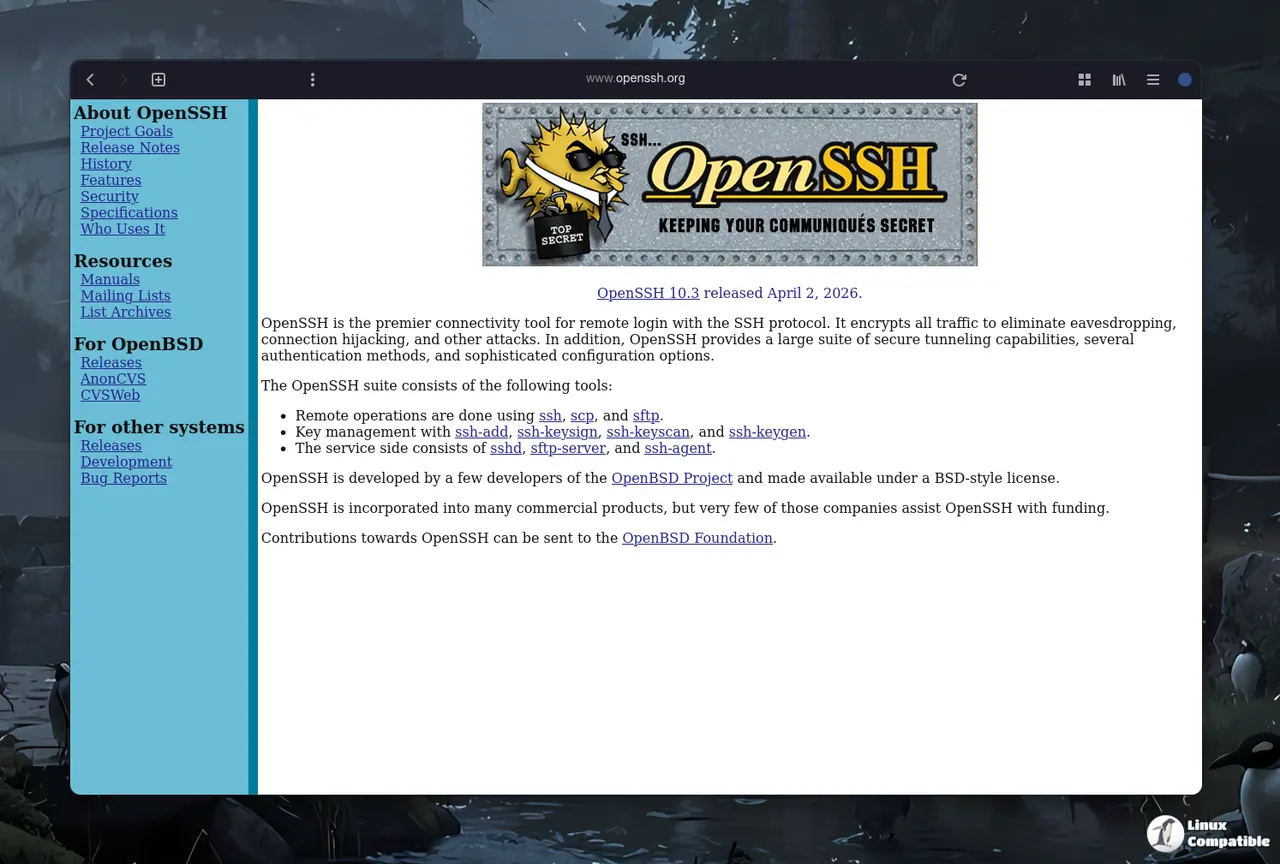
The latest update to the secure shell protocol implementation has arrived with critical security patches that address potential command injection risks. Administrators and power users should pay close attention to changes in certificate validation and shell metacharacter handling before updating their systems. This release of OpenSSH 10.3 also introduces new flags for managing connection multiplexing without needing to dig into configuration files.
Security Updates Address Command Injection Risks
The security team caught a late-stage bug where shell metacharacters in user names supplied on the command line were validated too slowly. In certain configurations involving Match exec blocks, an attacker controlling the username could potentially execute arbitrary commands if they exploited %-tokens in ssh_config. This is exactly the kind of issue that keeps sysadmins awake at night because it turns a simple login attempt into a remote code execution vector. Another fix addresses scp downloading files as root in legacy mode where setuid bits were not cleared correctly, which dates back to the original Berkeley rcp program and remains a lingering hazard for anyone using older transfer methods.
OpenSSH 10.3 Tightens Up Certificate Validation And Proxy Jump Hardening
OpenSSH 10.3 tightens up how certificates with empty principals sections are handled because treating them as wildcards was too risky for production environments. If a CA accidentally issued a certificate with no principals, it could previously authenticate as any user trusted by the CA instead of failing gracefully. The update also validates user and host names in ProxyJump options passed via the command line to prevent shell injection attacks from adversarial input. This distinction matters because configuration files did not perform this validation before now so consistency has finally been enforced across both sources.
New Features For Connection Management And Debugging
Users who frequently manage multiple SSH sessions will appreciate the new escape options that display connection information without killing existing multiplexing processes. The ~I escape and ssh -Oconninfo commands allow operators to check channel status or connection details while a session remains active in the background. Support for IANA-assigned codepoints for agent forwarding is also included so newer protocols are preferred over the older @openssh.com extensions that were previously standard.
Check your repositories and update soon because waiting on security patches never ends well for server integrity. Stay safe out there.


