OpenSnitch 1.8.0 released
The latest OpenSnitch update is rolling out; version 1.8.0 arrives this week. For users who are already deeply familiar with the power user application, there’s some important context.
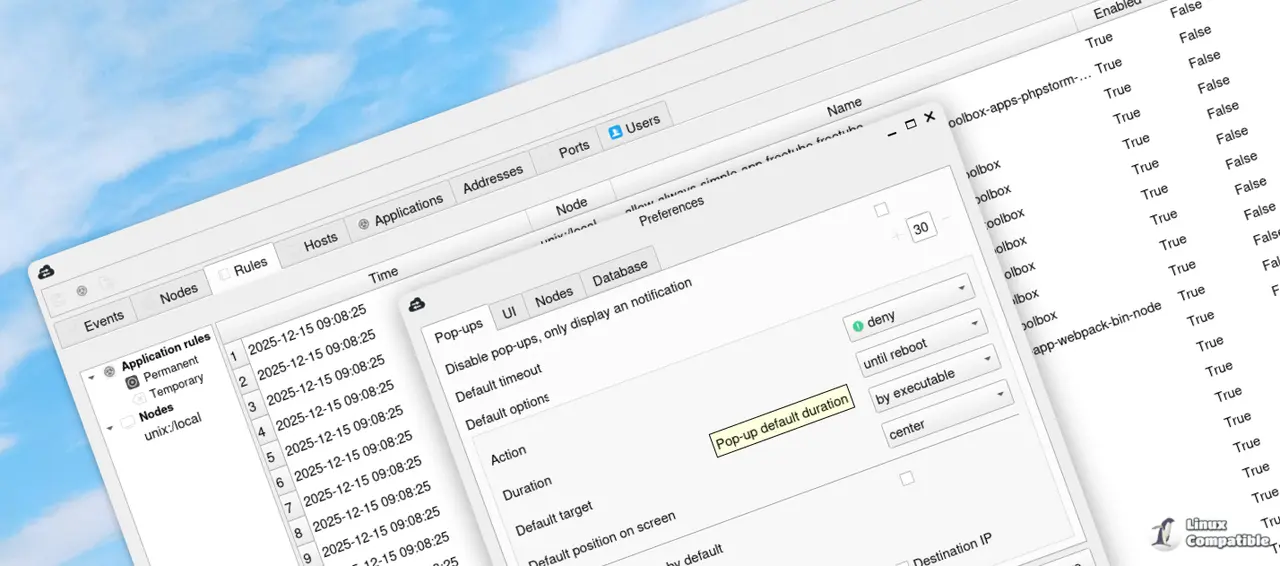
One major change involves the GUI, built on PyQt6 now instead of PyQt5. That might sound subtle, but it's significant because support for PyQt5 is winding down across many GNU/Linux distributions; they're moving away from it entirely. This update reflects that shift and aims to keep OpenSnitch modern going forward.
The practical effect? Some older distros like Linux Mint 21.2, Ubuntu 22.04, or earlier versions of openSUSE no longer guarantee out-of-the-box compatibility. However, if you need the GUI now, it's still possible to get it running by installing a specific PyQt6 package via pip for these systems. And keep an eye out; a Flatpak version is also in development.
It’s worth noting that while the new graphical interface won't play nice with older distro versions, the underlying system service (the daemon) v1.8.0 should still work alongside its slightly older sibling, v1.7.2. That should help smooth things over for users on legacy OpenSnitch setups who prefer to wait before upgrading entirely.
Beyond this PyQt6 migration, version 1.8.0 brings several other substantial enhancements worth looking at.
The core management of firewall rules has been streamlined: rules are now grouped together in a single table within the interface, making it less cluttered and easier to handle for users managing their network security actively.
On the backend, the daemon itself sees significant upgrades, too. You can now configure application-specific nftables tables directly from OpenSnitch's audit section; this offers greater precision if you're digging into system-level filtering details. Plus, there's more flexibility built in with the ability to set a custom audispd_events socket path.
The task automation features have also seen some action: tasks can now be loaded straight from disk storage, and new ones like an IOC scanner and a dedicated downloader task join the existing capabilities. And OpenSnitch continues its trajectory toward handling more complex deployments, thanks to multi-node improvements and overall performance boosts.
Over on the user side, the GUI overhaul beyond just using PyQt6 has introduced some welcome usability tweaks too; think smaller interface adjustments and better notification displays directly from the application for when rules are added or changed. Further system-level enhancements help ensure OpenSnitch remains responsive even with complex firewall setups.
On a less headline-grabbing note, plugin support receives its own little update in this release cycle: there's now built-in code to check which versions of existing plugins you have installed.
Lastly, it seems some users running recent kernels, specifically the 6.17.x series, might encounter problems creating certain new firewall rules (like reject, log, or quota types). The OpenSnitch team is aware and investigating this further to bring the system back in line across all supported environments.
Release OpenSnitch v1.8.0
Important changes of this release GUI migrated to PyQt6 #1222 We've migrated the GUI to PyQt6 because PyQt5 has been deprecated, and many distros have started to remove it.