Liquorix Linux Kernel 6.17-13 released
Steven Barrett has just released a new version of the Liquorix Linux kernel, specifically 6.17-13, based on the stable Linux kernel 6.17.11.
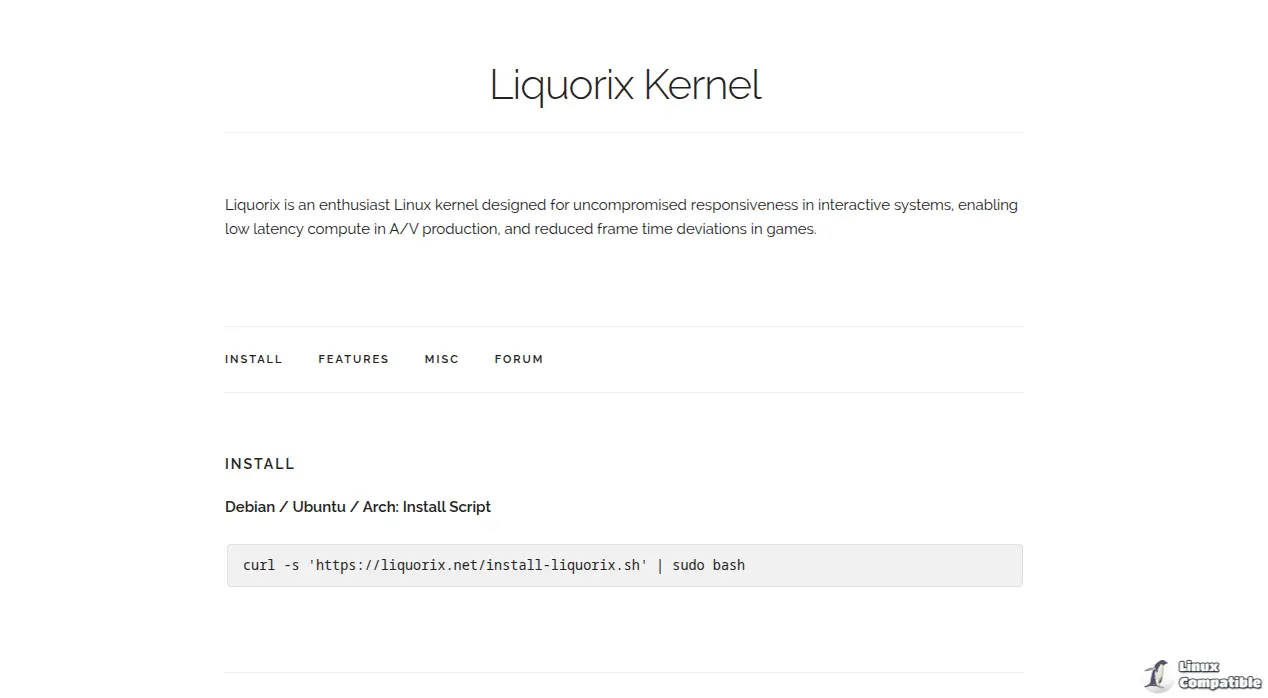
Liquorix is essentially a custom-built kernel designed to optimize your desktop experience, particularly for multimedia and gaming workloads. It takes the standard kernel but focuses on tweaking things to make it faster and more responsive by tapping into performance capabilities that might not be fully utilized or enabled in distributions' default kernels.
This kernel brings several notable improvements. One key feature is their take on interactive tuning, called Zen Interactive Tuning, which cleverly adjusts system settings to favor responsiveness over saving power. This update makes sense if you're doing demanding tasks like gaming, where speed feels more important than battery life (or maybe you just want that snappy feeling).
Speaking of the kernel's internals, there are also changes in how it handles I/O and memory management. They have optimized various parts of the Block Layer with several tweaks, such as enabling background reclaim for hugepages to improve overall memory management.
Also, setting minimum cache TTL timings at 1000 ms helps keep network latency down. They decided against using some older features, specifically the compact, unevictable, and proactive compaction options, because these might have slightly over-optimized performance or caused unnecessary overhead; this decision was made to balance performance with stability.
For CPUFreq control, they've adjusted the ondemand sampling parameters, tweaking the down factor (when power saving kicks in), default up threshold (how sensitive it is to needing more power), and micro up limit. The goal here is clearly faster responsiveness when you need it most.
Beyond these core responsiveness tweaks, Liquorix 6.17-13 includes some extra performance features too. High-resolution scheduling gives the kernel even finer control over timing tasks, useful for making sure everything runs smoothly without jittery interruptions. There's also a special real-time system handling method included.
Then there are other technical enhancements like support for Budget Fair Queue (BFQ), which helps manage disk I/O and keeps latency in check while ensuring fair access for different applications, especially on desktops where background tasks can interfere with foreground ones. They've added TCP BBR2 Congestion Control to improve data transfer speed during times of network congestion; it basically manages the flow better.
Additionally, they’ve enabled Compressed Swap (using LZ4 compression via zswap). This reduces memory requirements for swap by compressing pages in use, effectively shrinking your virtual RAM footprint a bit if you need to extend beyond physical limits. It’s an intriguing little optimization tucked away.
For deployment, it's straightforward if you're using Debian, Ubuntu, or Arch Linux. Liquorix provides binary builds tailored for Stable (like Trixie), Testing (Forky), and Unstable (Sid) releases, making compatibility easier than just grabbing the generic kernel source from Linus’s tree. These are available through their own PPA, so installing them is simple if you prefer that route.
The kernel itself supports a broad spectrum of hardware, and its primary purpose remains clear: it can be used as a direct replacement for your distribution's standard kernel without needing complex changes or extra modules usually required with some custom kernels. It’s designed to slot in easily.
If you're curious about trying this kernel out, there's an easy-to-run script on their website that handles the installation automatically via curl and bash (you just need sudo access).
curl -s 'https://liquorix.net/install-liquorix.sh' | sudo bash
This should get you started, but always double-check compatibility before diving in.


