Upgrade to GNOME 48.10 without breaking your desktop workflow
This stable bugfix release for GNOME 48 is now available and includes critical security patches alongside usability tweaks. Users should upgrade immediately to fix infinite loops in power settings and resolve focus issues after waking from suspend. The update marks the final version of this series before moving on to newer major releases.
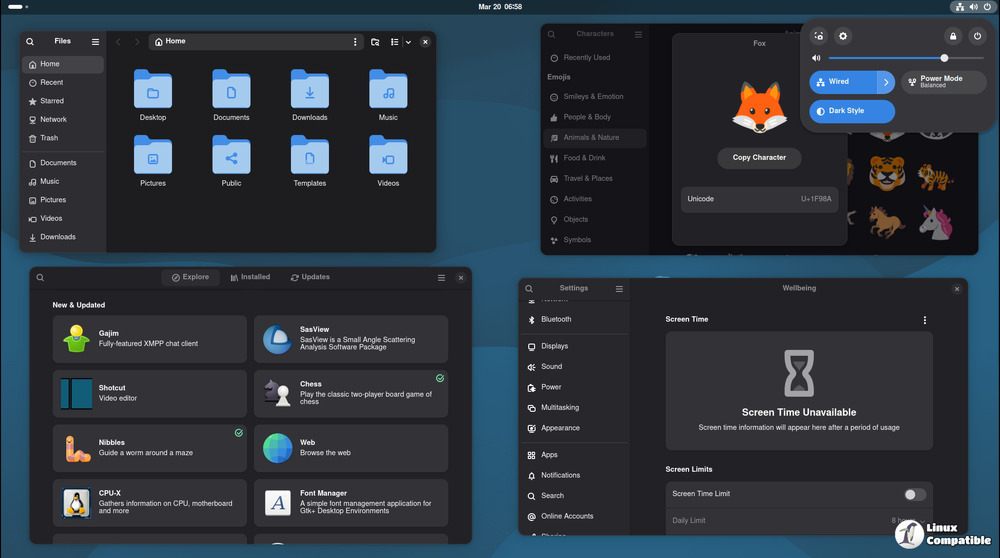
Why GNOME 48.10 is the last stop for this cycle
The development team has labeled this as a stable bugfix release intended to be boring, which is exactly what most users want when they are trying to get work done. It serves as the final stop for the current major version before everyone starts thinking about upgrading to GNOME 49 or GNOME 50. System administrators and desktop engineers should treat this as a required maintenance window because it closes out the lifecycle for the 48 series. The release notes indicate that GTK+ 3 will see reduced frequency of releases in the future, so fixing critical issues here matters more than adding new features.
Fixes for power management and screen focus problems
One specific pain point addressed in this update involves the control center handling missing UPower data gracefully. Previously, some users reported an infinite loop when switching battery charge modes if the system could not detect the power source correctly. This behavior would freeze the settings window and require a hard reset to recover from. Another significant improvement targets the lock screen focus after resuming from suspend states.
I have seen this happen after a bad driver update where the monitor wakes up but the cursor stays stuck on the login screen until a mouse click is registered. The shell now handles this idle inhibition for screen time tracking better and prevents users from being deselected after an idle period during the initial setup. It also fixes tab focus behavior in the quick settings menu so that keyboard navigation does not get lost when switching between brightness controls and network toggles.
Security hardening in file access and graphics libraries
The GVFS update includes several security patches related to FTP paths containing carriage return or line feed characters. These vulnerabilities could have allowed attackers to manipulate mount URIs on systems relying on remote storage protocols. The fix ensures that paths with suspicious control characters are rejected before any connection attempts occur. GTK+ 3 also receives updates to prevent crashes when handling specific Wayland drag contexts or invalid accessibility events on unfocused tree views.
Developers working on legacy applications will notice that the release notes mention a decrease in frequency for future GTK+ 3 releases. This signals that the focus has shifted entirely to preventing regressions and maintaining stability rather than introducing new APIs. The libraries handling file operations now validate URI components more strictly to avoid potential memory corruption issues during asynchronous proxy creation.
What to expect after the update runs
Once the system restarts, users will find that default folders are no longer recreated if they were removed previously. This prevents a common annoyance where custom directory structures get reset automatically by the login process. The screenshot tool also receives accessibility improvements so that icon buttons can be navigated more easily with screen readers. Translation updates for various languages are included to ensure non-English speakers see accurate labels in menus and dialogs.
It is worth noting that NetworkManager did not receive an upgrade in this specific release, so existing network configurations remain unchanged unless a separate update applies later. The core system libraries like libadwaita and mutter received version bumps that address direct scanout issues on drivers without explicit modifiers. This means users with older graphics hardware might see slightly better performance when the compositor handles framebuffer updates directly.
You can also use the official BuildStream project snapshot to compile GNOME 48.10.


